
A Finer Eye with ERIN REMINGTON
If you've ever felt overwhelmed by the world of art—from understanding different movements to finding the perfect piece for your home—you're not alone. Navigating the art market can feel daunting, but it doesn't have to be. With over a decade of experience in fine arts, including a Master's in Modern Art History, Theory, and Criticism, Erin Remington has dedicated her career to helping collectors find and appreciate exceptional art. As the Manager of Curation and Art Advisory at Saatchi Art, Erin believes that art can inform, inspire, and even change how we see the world, and she is passionate about helping others build a collection that truly speaks to them.
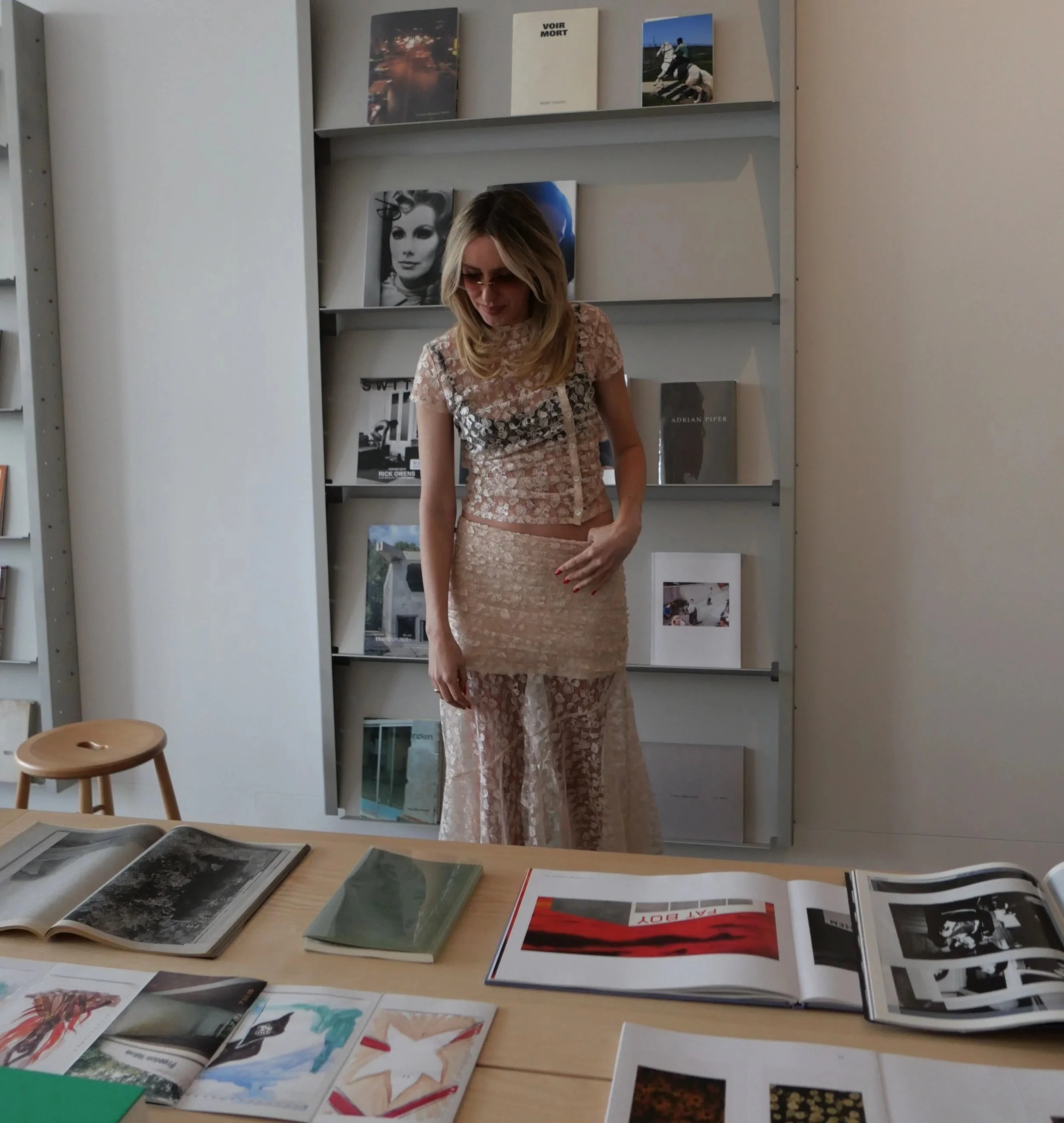
Erin in an architecture book store on Melrose Ave source for art and architecture literature
How did you become an art advisor?
I never knew anyone in the fine art world growing up, it was a completely unknown field to me. It wasn’t until I was in High School that I took an Advanced Placement course in Art History inHigh School for College credit that I really fell in love. I grew up going to museums and an interest for the arts. So from there I went on to study Art History and went on the path of working in museums and galleries and eventually found my way to art advisory. It’s fun to be able to work with collectors who have varying knowledge of art and connect them with something that speaks to them uniquely. No two artworks are the same and I think the same could be said about collectors. Every new person I work with is an opportunity for myself to also discover new artists when I am looking for something that will work best for each client.
Favourite part of the job?
It’s fun to be able to work with collectors who have various knowledge of art and connect them with something that speaks to them uniquely. No two artworks are the same and I think the same could be said about collectors. Every new person I work with is an opportunity for myself to also discover new artists when I am looking for something that will work best for each client.
What is the role of an art advisor?
The role of an art advisor is to be there along the entire journey of a client looking to purchase art. It can start as purely through a path of curiosity and exposing them to new artist and styles to more practical help like figuring out the right size, dimensions, artwork to fit in spaces. And also helping with sorting out framing, installation, archiving (if needed). It can run in many different directions and an art advisor might have specialities like say if you are interested in post-war art, there might be a better advisor for certain art historical movements vs contemporary art.
Are you there to advise the clients or support artists?
Working with an art advisor is very helpful for both parties because it allows both to have the comfort and flexibility to act in their best faith. We can be the bad guy if needed. It allows the artist to be candid on pricing, ability to finish a project and a client to share perhaps unsavory feedback on an artist that might be harsh for them to hear directly. Basically we get to work to translate best for each side what is needed with removing the fluff. Like any industry it’s all about relationships and really that is the most helpful part of working with an art advisor. You are getting to tap into their network and take advantage of someone dedicating their career to getting to know artists, galleries, collectors, etc.
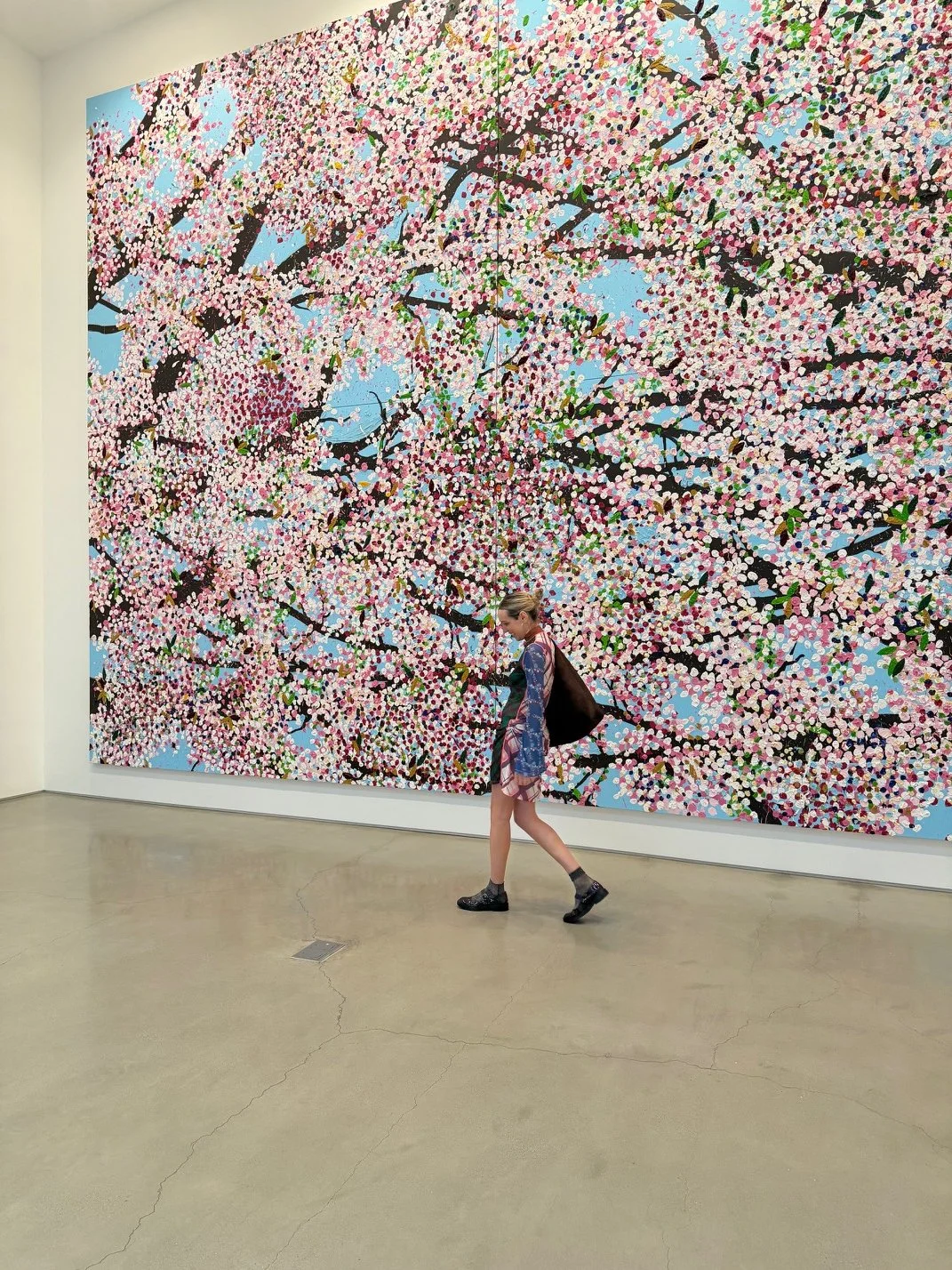
Damien Hirst’s work on show at Just One Eye store in West Hollywood
How has your experience and background been instrumental in your work now?
Today I have the unique ability to work with collectors all over the world digitally. I am the Director of Curation and Sales for Saatchi Art and we predominantly sell work online. My studies in modern and contemporary art affects how I look for new artists.
How do you navigate the balance between a client’s personal taste and what you believe to be a good financial investment?
I always want my client more than anything to love the artwork they are purchasing- this is more important than it being a financial investment. So much of the art market as an investment is very risky. But one thing that isn’t risky is loving a piece of art-chances are you will still love it for years to come. In a world where mass consumption and buying/replacing items every few years, art remains one of those special commodities that typically people don’t purchase many in a lifetime. So it is imperative you invest in what you love.
What is the most common misconception people have about the art market, especially those new to collecting?
The common misconception that I would love to see shift is that you have to be incredibly wealthy to be an art collector. This is simply not true. Of course there is a large range, and people see the big flashy numbers from auction houses and immediately take themselves out of the equation. We need to normalise owning art and living with art. I hold a strong belief that house with art is a home that is inspired and fulfilling.
What are some of the biggest trends shaping the contemporary art world right now?
Trends always seem to come and go and can be a buzz word. I like to focus less on trends and get curious about what type of work artists are creating. For awhile we were seeing a resurgence of abstract art after a huge boom of portraiture art. And of course digital art had its moment. I think now the focus is less maybe on the style and more the subject matter. What does the piece mean and why is it being created.
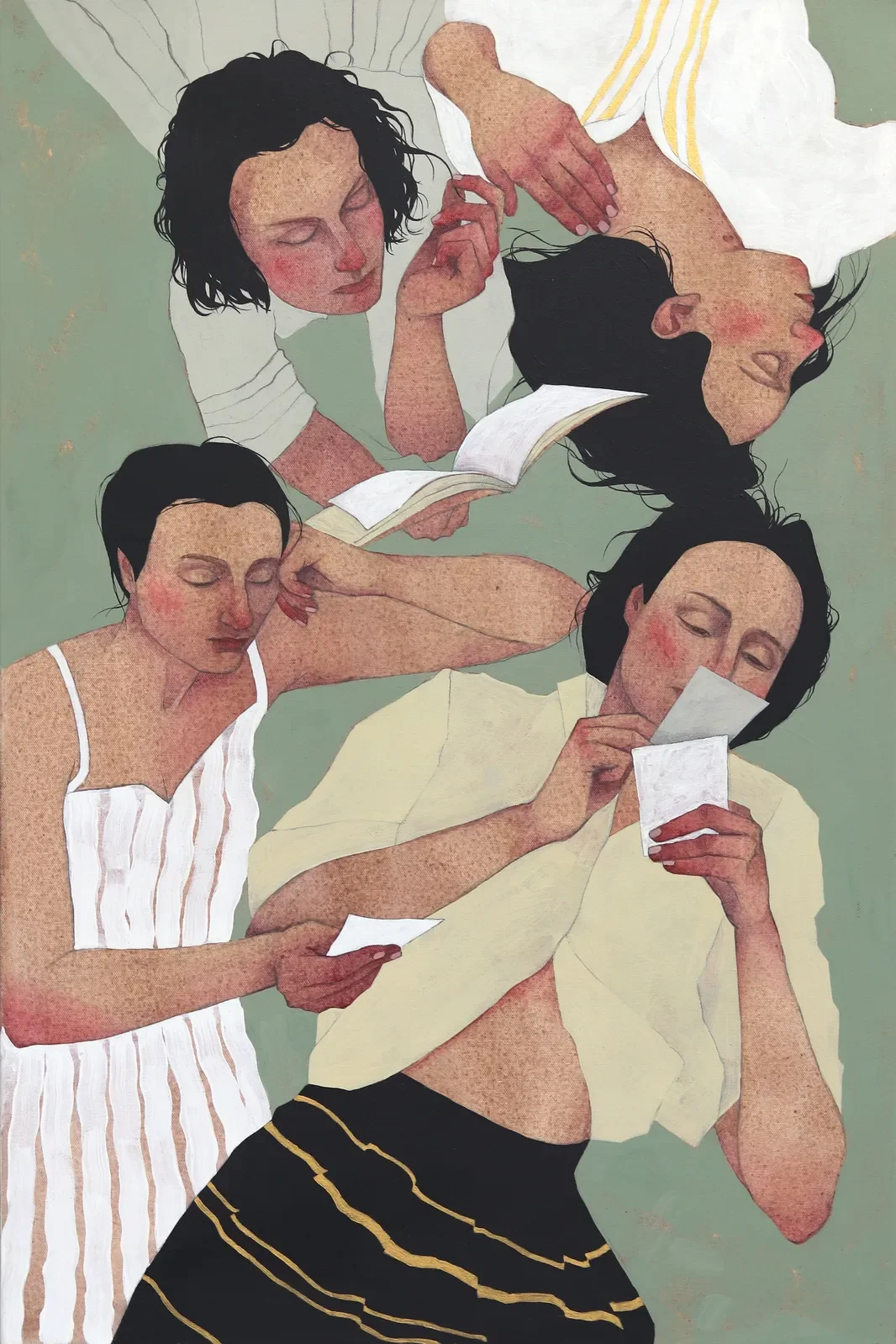
Dreamers by Xenia Gray
How has technology, such as NFTs and online viewing rooms, changed the way you discover and advise on art?
Not really to be honest! Neither seem to be relevant or a part of any my collectors journey in discovering art or artists they like. What I have found to be impactful is Instagram and TikTok. I think in a lot of ways the average person can discover artist they love by simply looking for artists they love on social media- it’s a rabbit hole, but a fun one.
How do you see the landscape of social media affecting the fine art world?
Social media is the most important tool for the art world that we will probably see in our lifetime. It allows for artists to share their work without galleries, a precedent we have never seen before. And on the flip side anyone can discover artists without having to live in a major city. It allows for in real time trends, movements and transferal of news to be done in matters of seconds. A lot of negative things can we said about the development, but I like to focus on the positive and I think at best it really will democratize the art world like we have never seen before.
For someone just starting their art collection, what is the single most important piece of advice you can offer?
It may sound silly but I tell me collectors to go into their closet and look at the top colours they wear, it’s usually the colour palettes they are drawn to. Your most worn sweater or dress or shirt. You will most likely be drawn to the same colours in artwork. Maybe you wear all monochrome, or neon colours- you may not always want that in your art but it’s a good starting point if you have no idea where to begin. Don’t be scared if your art doesn’t perfectly match your home style. Collecting should be evergreen and stay relevant today vs 50 years from now and that means don’t be so focused on your rug, couch our curtain colours- collect what you love!
Every week I write articles based on what I am seeing in the art market and cultural around me. Recently I wrote about the health of the art market. I reference the wide range we are seeing of pricing and what is selling. This Xenai Gray piece is a great example price around $2k of a quality artist producing great work, and a perfect time for new collector’s to get into the art market.
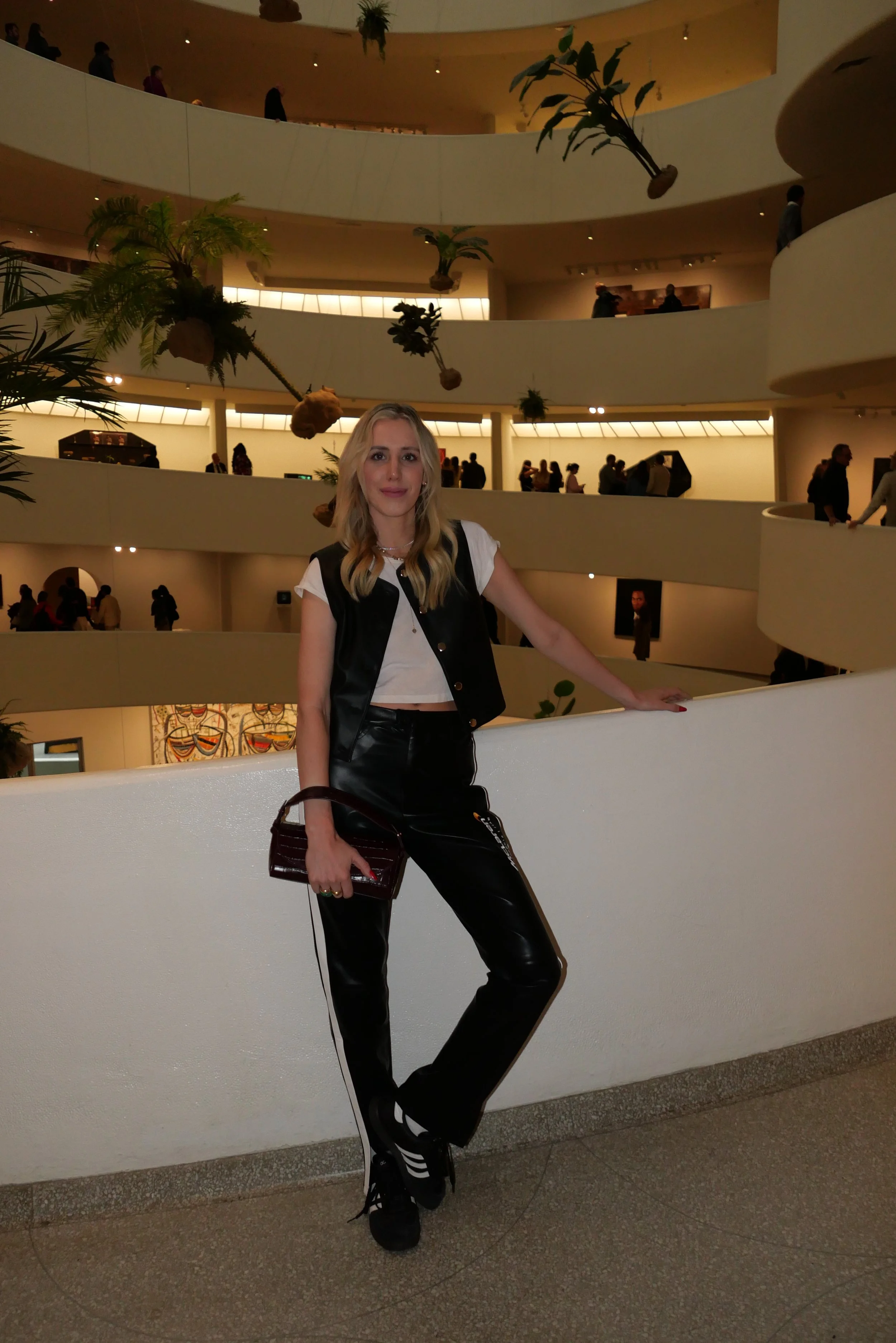
Erin at the Guggenheim NY, seeing Rashid Johnson’s work
As an art advisor, what is your criteria for good art?
This is a really good question, one I receive a lot from artists. First I want to say that art is subjective, to think that one person has all the answers is simply not true. From my experience of working with hundreds of artist and collectors there are patterns that seem to show up in good art.
The artist works in a consistent manner. They create works that are not completely polarizing, or if they do they leave that for the studio.
The work is executed technically well- while this is a little subjective I think most people can tell the difference between a work produced technically well and that of an artist still growing. This may take time to develop and see, but I also believe in people following their gut here.
The artist has a POV and their artwork is reflective of them. I know artists grumble when you ask for an artist statement- but it’s important.
Is the artist motivated and looking to show in reputable galleries, shows, art residencies- this is the difference between a professional vs a hobbyist. Neither are bad, just different. And by the way a hobbyist artist there is a space for you and collectors who would love to have your work. It’s best to “know thyself.”
Tell me about an artwork (or more than one) in your own home that you love and why.
So many pieces in my home that I adore, but my two recent acquisitions are noteworthy. Firstly, the portrait by artist James Lipsius. He is a British artist and I fell in love with his use of texture and how he depicts faces. And second, the piece above my bed, I recently purchased from a dear friend and artist, Bridgette Duran. She lives in New York and I have had my eye on this piece for a few years, so I knew it was meant to be and I love how well it fits over my bed.
What’s the best way to stay connected to the art world?
In a recent trip to New York, I visited the Rashid Johnson show at the Guggenheim. As a full time art advisor it is important for me to see shows being produced at all levels. This show was absolutely beautiful with plants floating from the ceiling and an excellent curation of Johnson’s work over the past 30 years.
How can people get in touch with you?
If you’re interested in more tips on collecting art or guidance for artists looking to grow their careers, I regularly share insights on TikTok at @afinereye. I also publish a weekly Substack with in-depth, practical advice for artists and collectors, insider perspectives on the art industry, and thoughtful ways to merge art with good design.
Get updates on more beautiful reads just like this one by subscribing to the Studio BAE newsletter.