
Transcultural History with HATTIE SPIRES
Hattie and I got together back during all of the Frieze buzz last year. We toured the Mayfair galleries who were on their finest form, and spent the day chatting about Hattie’s thesis which is centred around the Harlem Renaissance and its relationship with the British Empire. Hattie holds close this fascination with transcultural art throughout history and the impact it has had on today’s art. As a researcher, writer and curator it is precisely this valuable work that can challenge dominant narratives in art history.
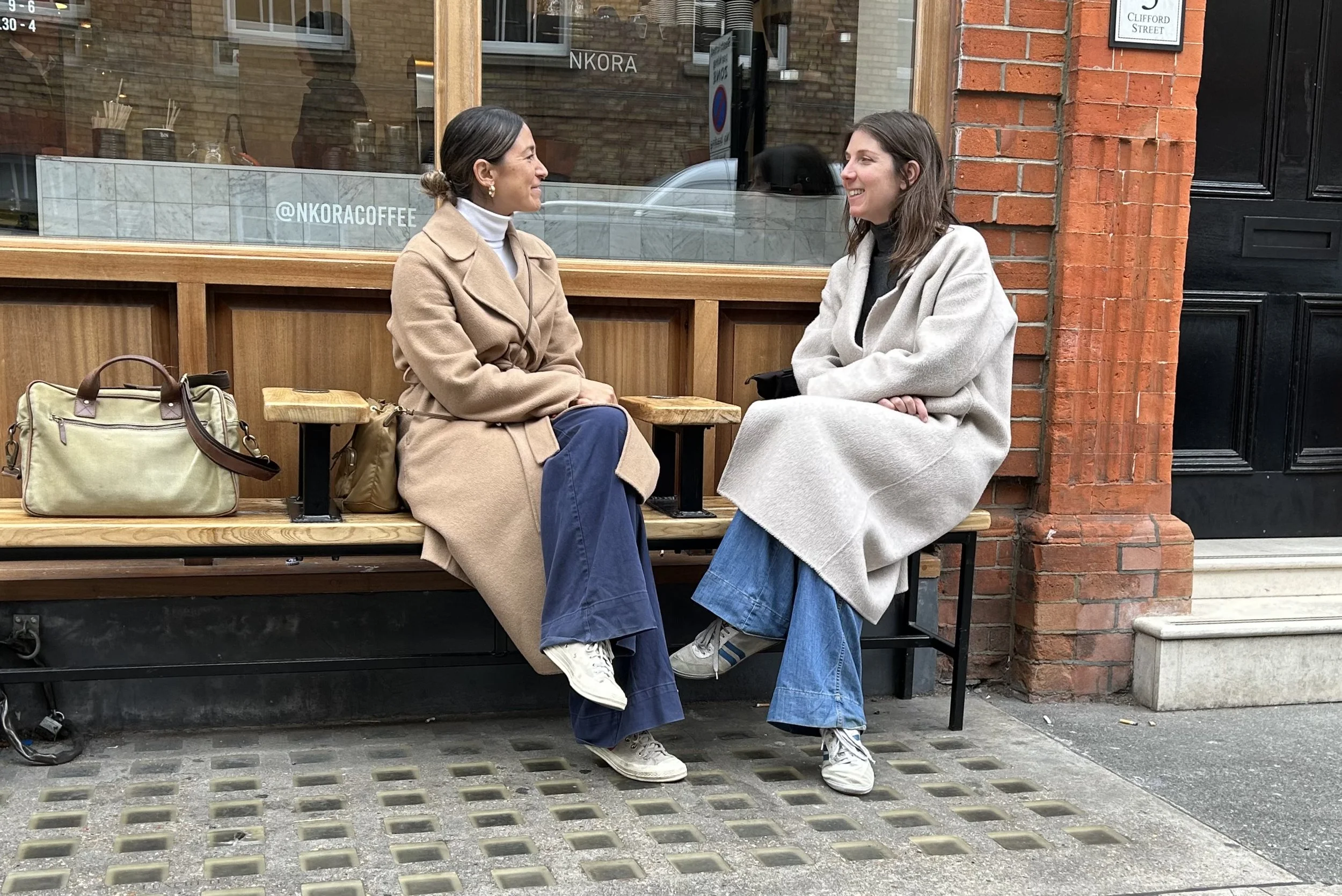
Hattie and I in front of a cafe during our Frieze week tour of Mayfair
How did you get into art history and curating?
Art history wasn't a subject that was offered at my high school. It rarely is on offer in the UK and especially not at state schools, so I didn't apply to do art history at university as it wasn't really on my radar as a possibility. It's something that I fell into once I had arrived at university. I was studying English Language and Philosophy at the University of Kent but dropped Philosophy as it seemed so dry and disconnected. I took up Art History as it was one of the few combinations with English Language that was offered then. I was instantly hooked.
I curated some photography shows on campus, undertook several internships and later went on to do a Masters at Goldsmiths in Twentieth Century Art History which, of course, is just applied philosophy using art as a lens! But that's what I love about Art History: the world is a very big place and art and artists can show you an infinite number of ways in. This is true whether you're displaying a 3,000 year-old Olmec figure or working through how to present the work of a living artist, or conversations with guest curators involving the possibilities of touring an overstuffed walrus. They bring interesting ideas, perspectives, materials and challenges and it’s your job to engage and make it happen.
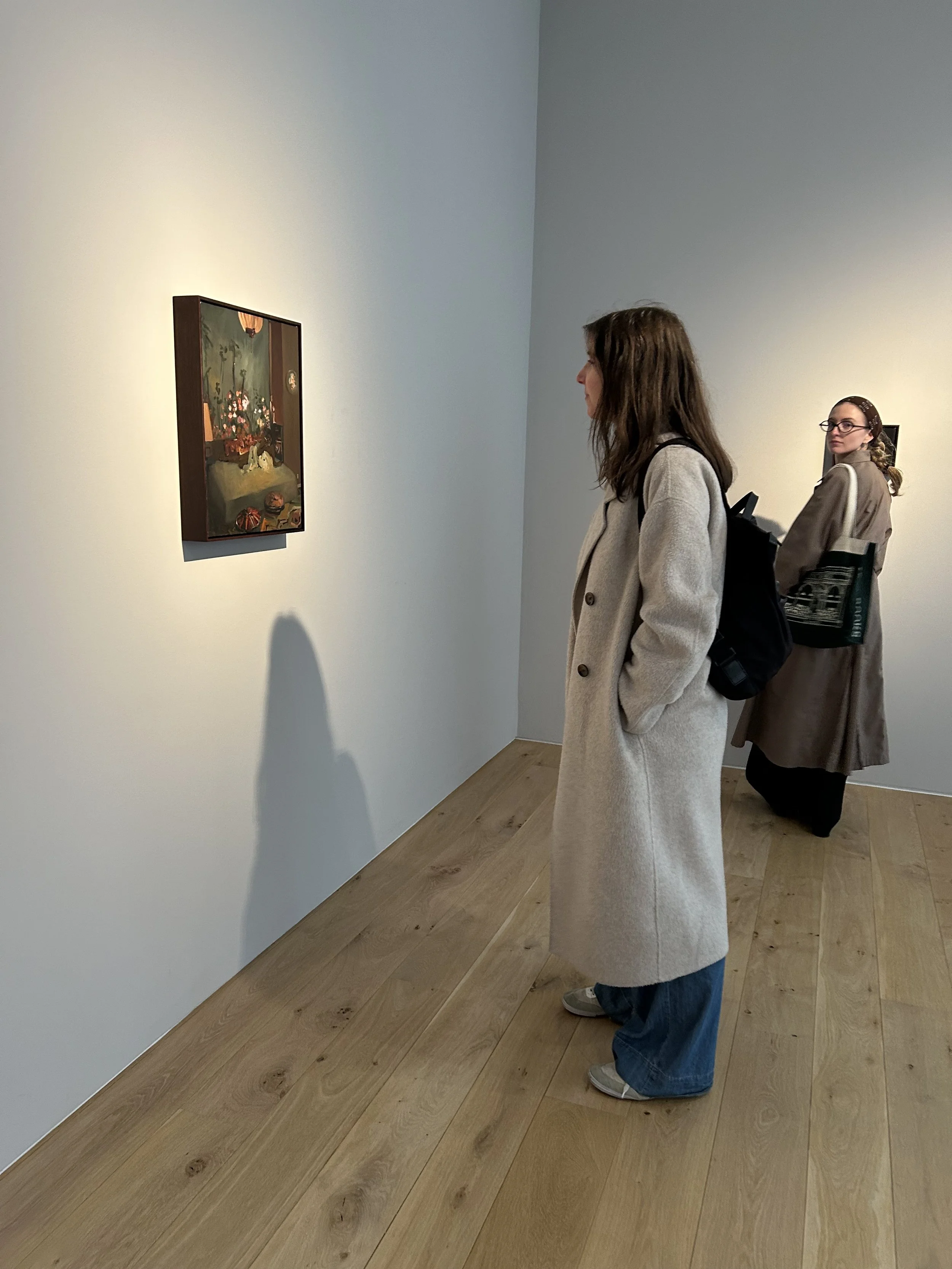
Visiting Galerie Max Hetzler with Hattie to see Danielle Mckinney’s exhibition, Second Wind
Tell me about your time at the Tate and the Courtauld Institute of Art.
I worked in Tate curatorial for a number of years on exhibitions, displays and acquisitions and my PhD is a Collaborative Doctoral Partnership between Tate and the Courtauld Institute of Art. It's such a rare treat to have your time ringfenced for thinking, researching, travelling, writing and making connections with people, yet I have managed to squeeze in other activity during this time. In addition to my doctoral research I was editor-in-chief of the Courtauld's journal of academic research, Immediations, and worked as an Associate Lecturer. I was also lucky enough to chip in doing some research for the Nigerian Modernism show at Tate Modern, a show whose premise dovetails with my work.
Tell me more about your PhD. What compelled you to take it on? Why is this such a passionate topic for you?
When the murder of George Floyd in 2020 led to the intensification of the Black Lives Matter movement, a global conversation started to unfold along with a new drive for equality and change. Statues, such as the Colston statue in Bristol, were toppled and there was a period of institutional self-reckoning. But there was also more division. People would say, in response to the toppling of the Colston statue 'but you can't change history.'
Of course you can.
There isn't one history. Who gets to write these histories? Which ones get to stick? I realised that my training had provided a very Eurocentric view of the world and I needed to dig deeper in order to do my job (of telling histories) properly. So I set out to put that straight. I wanted to understand another side of the story of modernism: how artists responded to Britain's imperial role in the twilight years of empire, and how art can be used to subvert, to challenge and to instigate change. Off the beaten canon, reading Western modernism against the grain.
What’s your thesis about?
My thesis traces Harlem Renaissance discourse through Pan-African independence movements and solidarity networks to the practice of artists in Britain and former 'Commonwealth' countries in West Africa and the Caribbean. Harlem Renaissance scholarship has traditionally considered the movement to be a national school - in fact, confined to upper Manhattan. My work challenges that scholarship by looking at networks of cross-cultural exchange via the threads of the end of the British empire. I explore how Harlem discourse shaped artists' practice in the years leading up to and just after independence from Britain, in Ghana and Trinidad. Thinking 'through' Britain in this way helps to challenge the idea of national schools of art and to consider a more connected, transcultural, global art history without the one-way flows of influence or power that lead to narrow histories.
Fascinating. And where do you place your research in time? Do you focus on the early 1900s or reference the impact on today's contemporary world?
My research starts between the wars then widens to the independence era when countries were gaining their independence from Britain (in the late 1950s and 1960s) so, 1919-1969 if we really want to pin it down! I do also touch on contemporary artists who consider themselves a part of the same continuum as those early pioneers. This knowledge of the past hugely enriches an understanding of the present.
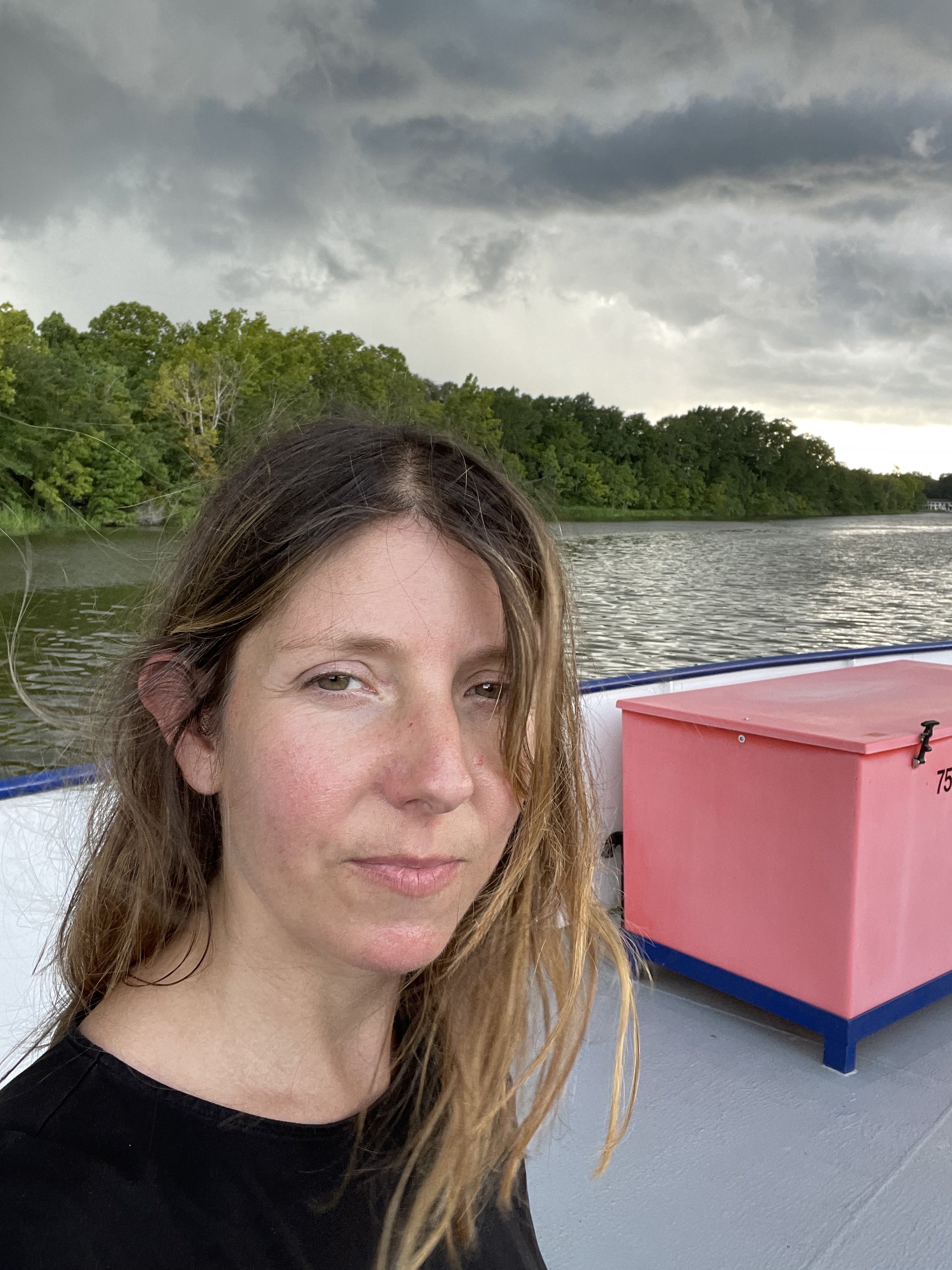
Hattie with a storm brewing above the Gees Bend Ferry crossing, Boykin Alabama
Where has your research taken you across the globe?
My research criss-crosses the Atlantic and has taken me to Harlem in New York City, obviously, but the story also unfolds across archives in New Haven, Philadelphia, Washington D.C., Atlanta and New Orleans in the United States. Whilst over there, I took the opportunity to drive to Boykin in Alabama to spend some time with Mary Ann Pettway - one of the quilt-makers of Gee's Bend who shared her weekend and many stories with me. I also made a trip to Canada to visit the nephew of an artist I was working on who connected me with people in Trinidad, so I followed those leads to Port-of-Spain and Tobago. Back across the Atlantic, I went to Ghana, visiting galleries and archives and family members of the artist I was researching in Accra and Mampong, then on to the incredible art department at KNUST in Kumasi and Cape Coast. Interestingly, Edinburgh plays a major role in the story too, and I have spent time there.
Wow. Anywhere else you wish you could have visited?
If I could keep researching I would visit Cardiff, Liverpool and many parts of Nigeria: Zaria, Ibadan and Osogbo, Nsukka, Lagos…also Tanzania, Zanzibar…the list goes on.
How tricky has it been to dig and find the right people or resources to get your answers?
This is such a great question. I focus on two artists and two artist models in my work and have been very reliant on the generosity of their descendants for information. I’m also a huge fan of visiting archives in person as they tend to reveal more than you are looking for. Archivists increasingly direct you to digitised files online, providing you with information that you have requested and are aware of. But how can you search for something or someone that you don’t yet know exists? Physical archives can help you in that respect. It’s always worth making the trip if you can. In one case, I was in the Tate archive researching something unrelated when I happened upon an exhibition catalogue that named an artist I had never heard of but whose dates and timeline of travel piqued my interest. I wasn't looking for him but he found me - from the marginalia - and the more I kept digging, the more I found, and his family were so open and generous with their knowledge and stories about him that the trail kept going, and it led me to Ghana, to Edinburgh, and to new connections and so many generous and supportive people - some of whom to this day send me anything to do with the artist if they come across his name in the archives. On the flip side, other protagonists - women especially - have stories that are harder to uncover fully due to the precarity of their archives, and you have to take a more oblique, fragmentary approach which, in itself, is fascinating. But there has been so much openness and kindness and sharing of information - it is an extraordinary process.
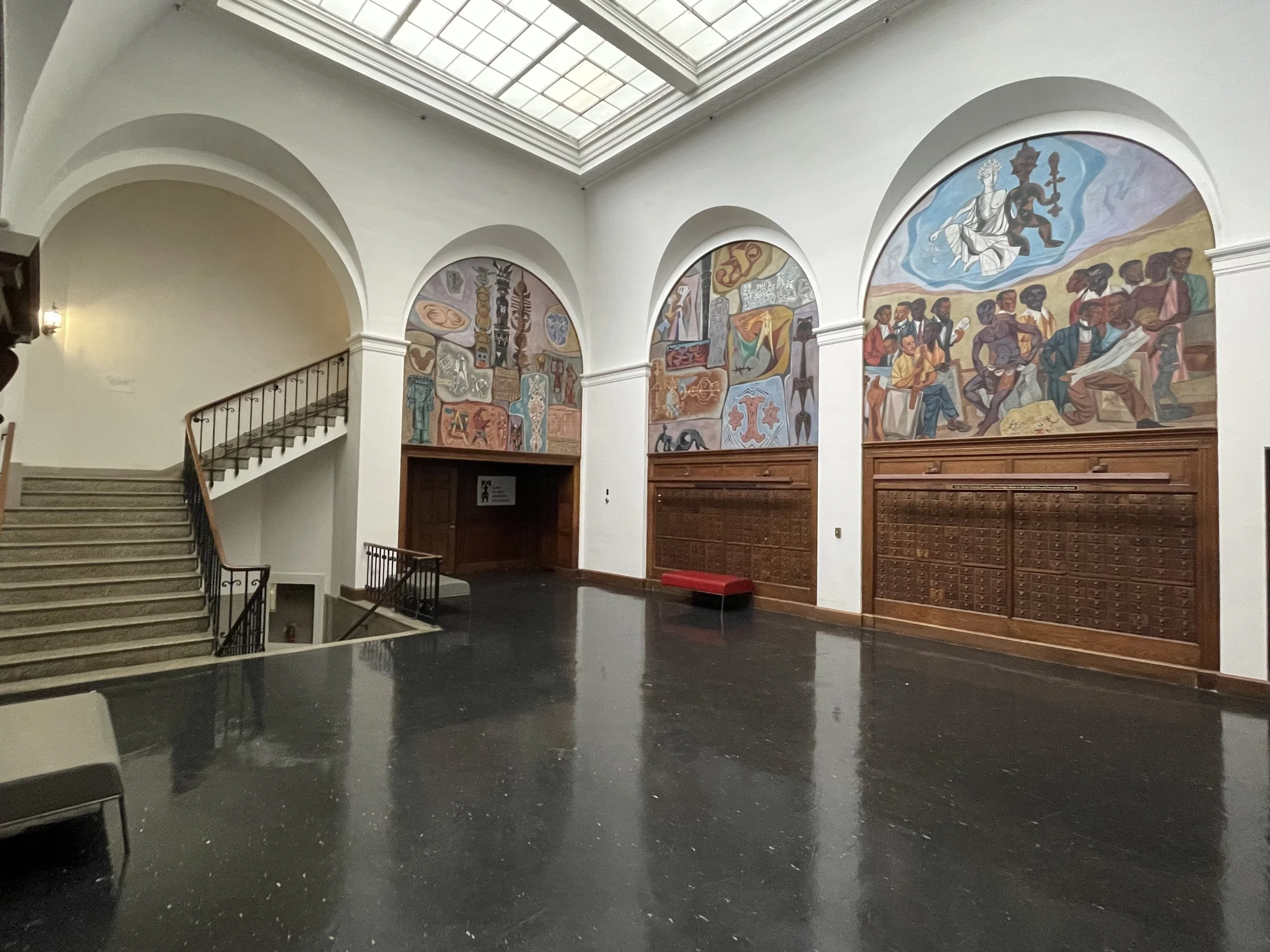
Hale Woodruff The Art of the Negro mural series (1938-51), Clark Atlanta University
In what specific ways did the visual artists of the Harlem Renaissance lay the groundwork for later movements or artists?
The artists of the Harlem Renaissance fundamentally redefined what art could do and who could do it. People such as Alain Locke and WEB Du Bois recognised the identity-forming power of cultural representation, refusing the old caricatures and stereotypes and insisted on Black visibility and autonomy in representation. Art became a tool for racial and political consciousness and this generation of artists were politically-engaged, laying the groundwork for Civil Rights-era visual culture. The movement brought the Black figure to the fore and artists such as Romare Bearden and Elizabeth Catlett, who were involved with the Harlem Renaissance, went on to be part of the Black Arts Movement in the USA in the 1960s. The movement forged a network of patronage, art education and publication - all essential components in the infrastructure that would allow future generations of artists to exist professionally.
Who are some artists that you’ve encountered along the way that you love?
Understanding these histories has opened up a deeper engagement with work by contemporary artists and filmmakers who know these histories and reference them in their own work. The department of Paintings and Sculpture at the Kwame Nkrumah University of Science and Technology in Kumasi knocked my socks off. My research looked at one of the early artists who was involved with the department at its inception - Oku Ampofo. Artists training there today are all part of a continuum that trails back to Ampofo and his practice that pushed for political change. They're producing work that is challenging and confident, often on an extraordinary scale. El Anatsui, Rita Mawuena Benissan and Ibrahim Mahama frequently show in Britain - these artists have this same energy. I highly recommend Mahama’s current installation ‘Parliament of Ghosts’ at the recently opened space Ibraaz (now closed). You can feel it too at the Nigerian Modernism show that recently opened at Tate Modern and the beautiful ‘Mrinalini Mukherjee and Her Circle’ show at the RA. Sybil Atteck was another pioneer, tuned into Harlem's discourse and working in Trinidad. She is written up as a cultural nationalist but was far more international than she is often given credit for. The fact that she managed to forge a professional career for herself as a woman in the 1930s and 1940s is extraordinary.
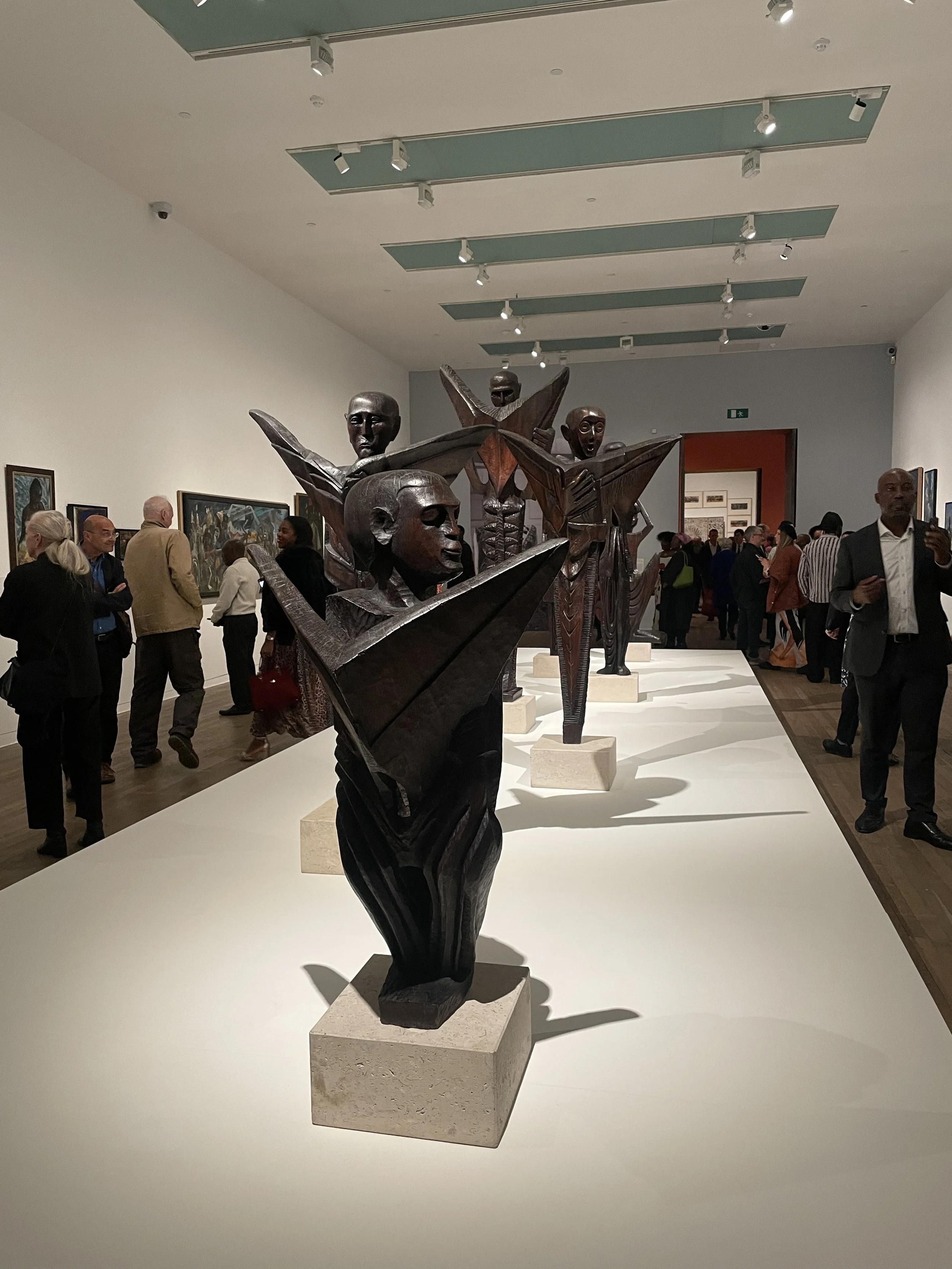
Seven wooden sculptures commissioned by the Daily Mirror (1961) by Ben Enwonwu installation view at Nigerian Modernism, Tate Modern, 2025
Do you see contemporary artists directly engaging with or responding to the themes and styles established during the Harlem Renaissance?
Absolutely. This history is intrinsic to modernism and when you become aware of it, the references reveal themselves to you across many media. Isaac Julien has had a sustained interest in the politics of the Harlem Renaissance throughout his career. Films such as Looking for Langston (1989) and Once Again... (Sculptures Never Die) (2022) incorporate the work of some of the movement's artists and thinkers to consider what he describes as 'the unfinished business of modernism' and questions around the restitution of objects that had been violently extracted from their original contexts and used by the European avant-garde.
The recent Kerry James Marshall show at the RA is another example. He is known for embedding art historical and other cultural references in his work. Take, for instance, his work Untitled (Porch Deck) from 2014. Two people lean against a porch balcony and in front of them is a diaphanous white curtain. One of the figures is partially obscured by it as he looks through or beyond the veil. It is impossible not to think of WEB Du Bois writing on 'double consciousness' when I see this work.
Artists such Faith Ringgold, Sonia Boyce and Lubaina Himid continued Harlem's political debates in their practice through a focus on Black identity and visibility. Himid's Naming the Money (2004), for example, restores agency, individualises and gives a voice to the 100 cut-out figures that comprise the installation. Spider-Man: Into the Spider Verse (2018) is another work rich in nuance and references, alluding to double consciousness and work such as Ralph Ellison's novel The Invisible Man (1952).
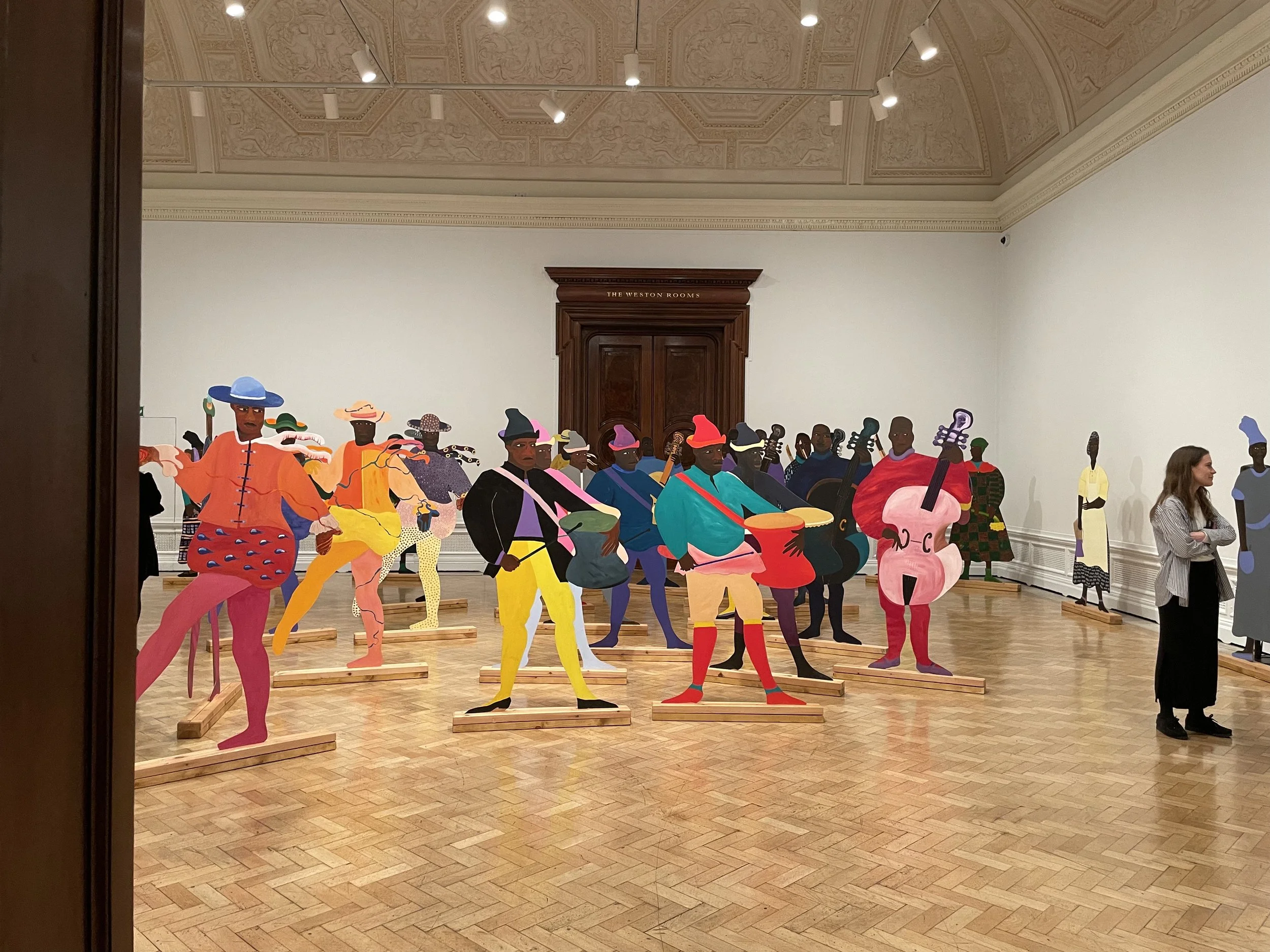
Lubaina Himid, Naming the Money (2004) installed as part of the Entangled Pasts exhibition at the Royal Academy, London 2024
How does all of this research fold into curation and why is it so valuable?
Research is fundamental to curatorial work. And many aspects of curatorial work - travel, making connections with people and writing - are all interconnected and overlap with what goes on in doctoral research. You often used to hear curators say that the word 'curate' comes from the Latin to 'care' - to the point that it became a bit of a running joke. But there's something to it. Objects have stories to tell and when they are assembled with other objects they can be coerced into telling other stories. Curators produce content. They set out propositions and in order to do that work properly, deep research is required. When you're working at an institution, you have to carve out space to do research amongst the daily work of meetings, emails, acquisitions proposals, valuations, exhibition design, conservation questions, scheduling and hundreds of other things.
All of this work is interesting but it can be hard to find time and space to do research. I have been very fortunate to have had time ringfenced to do this work, which should benefit my practice going forward. You can't pour from an empty cup. And it is about care, but not necessarily in the ways that you expect. You care for the object, but you also care for artists, audiences, colleagues and must take care to make space for nuance in story-telling and knowledge-sharing. Especially when social media is driving people into ideological silos.
Aside from contributing to cultural debate, to knowledge, and to the field... a friend and colleague who encouraged me to pursue this doctoral research once said that this type of work is a bit like a Power Rangers battle.
(at this point Courtney shoots Hattie a curious look)
You do your tiny bit of focussed work and others do theirs and together it builds into something larger, something that others can launch off from and that seemed like a pretty good analogy to me. When you throw the rise of AI into this mix, it becomes even more important to do original research. There should be a premium on it in the future!
Sign up to keep up with upcoming blogs and news from the studio.