
The Collector's Market with RAPHAËL ISVY
Raphaël Isvy is a Paris-based art collector with a background in finance and mathematics. Known for his social-media-savvy approach and deep focus on figurative art and portraits, his walls feature rising stars and established names alike, including George Condo, Robert Nava, and Robin Francesca Williams. Isvy isn't just acquiring pieces; he is an active voice for transparency and community in the art market, bridging the gap between high-end curation and the vibrant, fast-paced world of digital-era collecting.
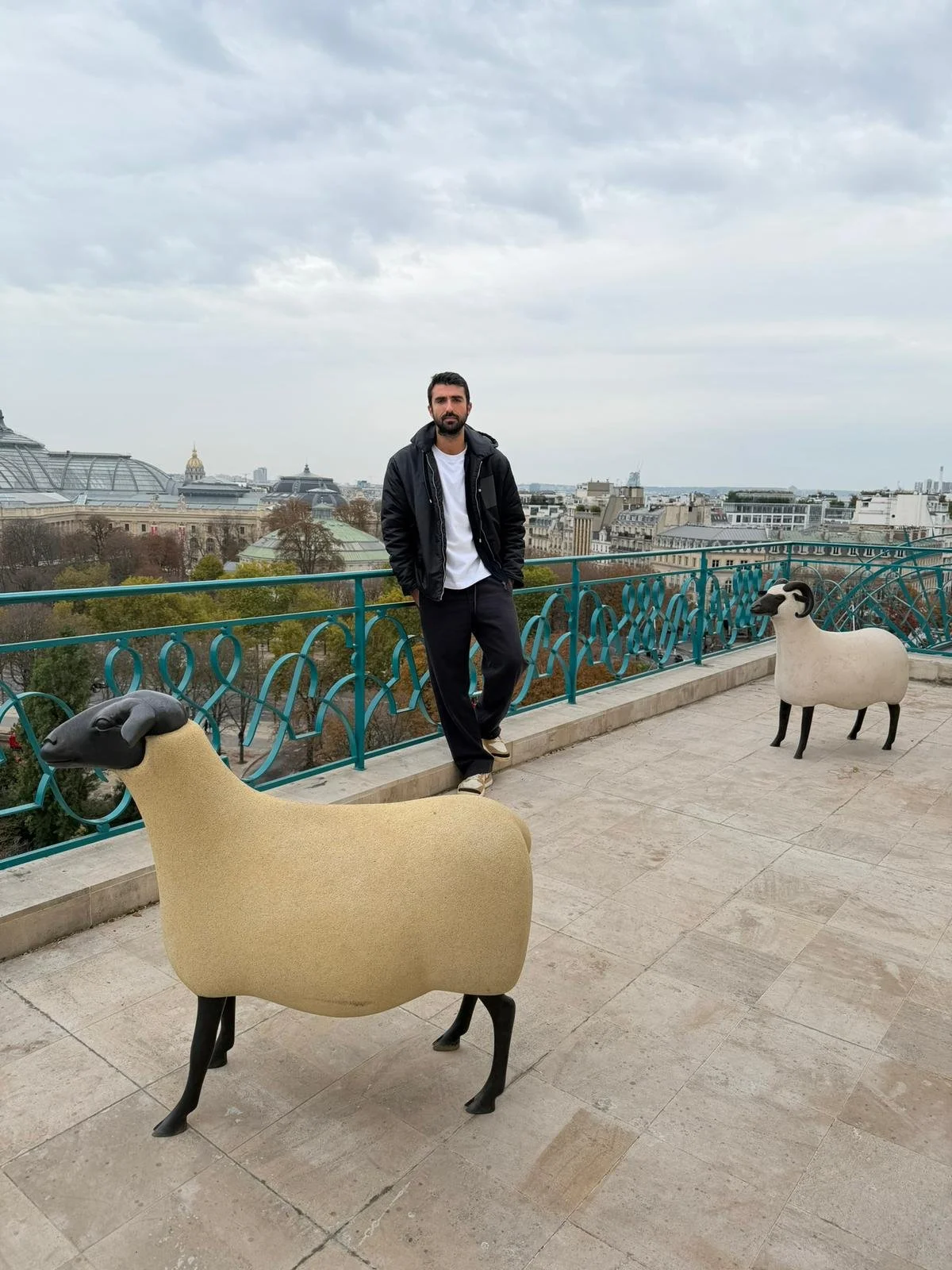
Raphaël alongside sheep sculptures in bronze by François-Xavier Lalanne
Hello Raph! Tell us a little about yourself…
Hello. So I’m 36, born and raised in Paris. I studied mathematics and spent ten years working in finance before deciding to leave that world behind and fully dedicate myself to collectibles — art, Pokémon, NFTs, watches, and more.
And how did you start collecting?
My relationship with collecting started very early. As a kid, it was Pokémon cards. Later, sneakers followed. From there, it felt like a very natural evolution toward art prints, designer toys, sculptures, and limited editions — early KAWS, Colette-era releases, and artist collaborations that were still under the radar at the time.
What really hooked me was the feeling of accessing something rare, something others were also searching for. Especially when it’s a limited edition, there’s an emotional intensity that is very hard to replicate elsewhere.
For me, collecting has never been primarily about buying or selling. It’s about the hunt, the research, the network you build, and the people you meet along the way. Over time, this journey introduced me to some truly exceptional human beings, which is ultimately what makes it so meaningful.
Tell me more about the buying and selling process.
Art and liquidity are almost complete opposites, especially in the current market environment. Between 2021 and 2023, we experienced an exceptional and somewhat irrational phase where almost everything had value and could be sold extremely quickly. That period is clearly over — and in many ways, that’s a good thing.
During that run, prices were constantly going up, even for works people had no intention of selling. It created a strong sense of validation: you felt smart, confident, rewarded for trusting your instincts. Today, the reality is very different. You need patience, discernment, and a longer-term mindset. Most works are available, but resale is far from immediate.
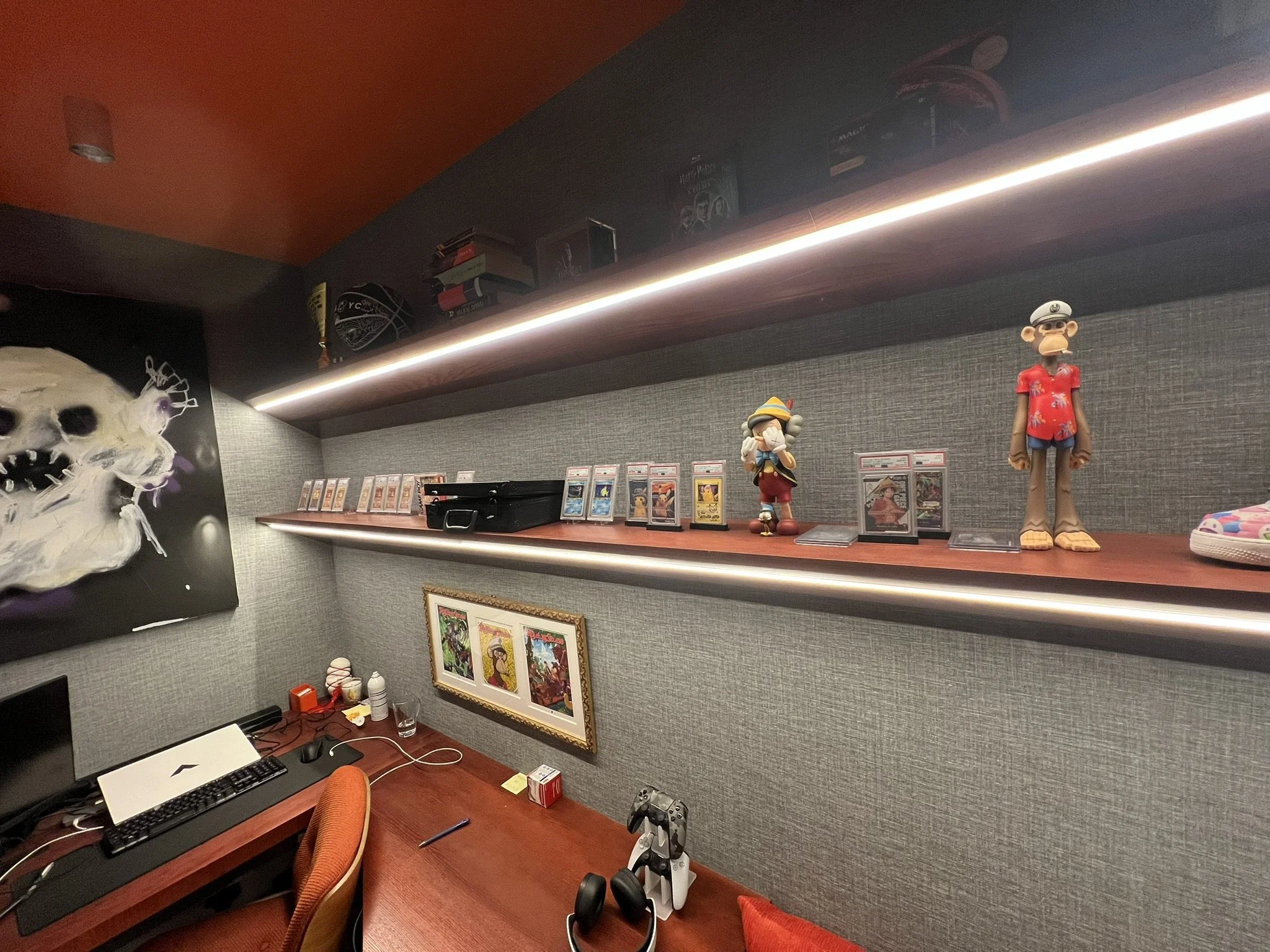
Raphaël's Pokemon collection alongside Robert Nava, Ghost
Auctions now play a major role. Since many artworks can be acquired at auction — often significantly cheaper — the primary market has become more difficult, which puts pressure on galleries and disrupts the traditional ecosystem.
When it comes to selling, private sales and auctions are the only realistic options. Neither is inherently better; it depends on the artwork, the price range, and the network involved. In fact, most potential deals I observe never actually close, particularly for works under €300K.
As for trades and upgrades, unlike Pokémon or other trading card games, art doesn’t really function that way. It’s unfortunate, because many collectors would gladly exchange works as their tastes evolve.
In a market often driven by hype, how do you distinguish a trend from an investment?
I learned this lesson the hard way. The Covid and post-Covid years were truly a once-in-a-generation moment. People were spending more time at home, focusing on interiors, Instagram, and what others were collecting. This created a perfect environment for hype-driven behaviour.
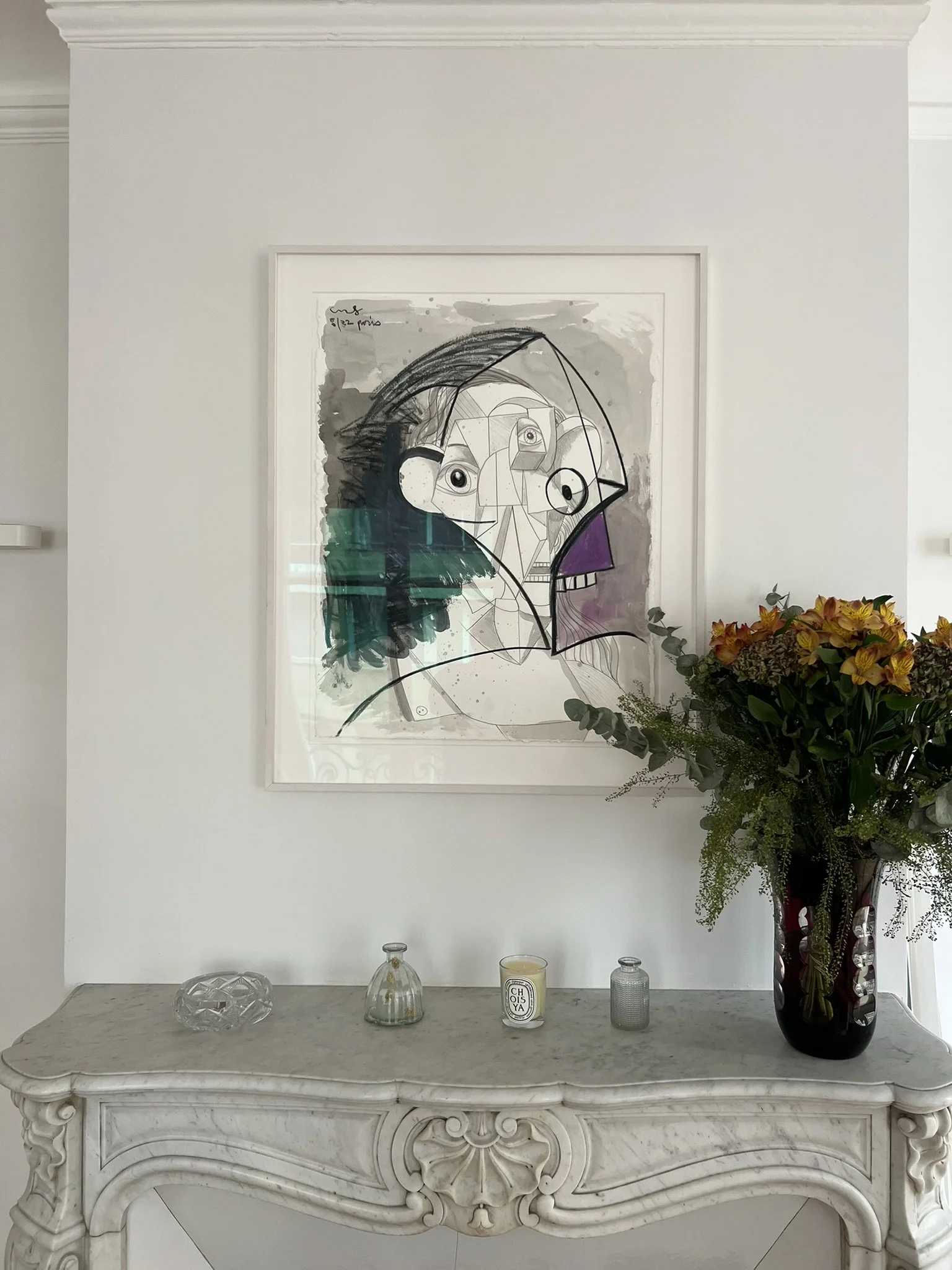
Psychological Cubism, George Condo
Prices skyrocketed extremely fast, and many of us, myself included, bought too impulsively. Anything visually appealing felt like a good decision. At that time, fundamentals were often overlooked: the artist’s career trajectory, gallery representation, institutional recognition, medium, technique, production volume, and overall consistency.
The current market has acted as a brutal but necessary filter. Today, the works that remain in demand are those supported by strong careers, serious galleries, and long-term narratives.
Collectors are far more selective now. We take time to research, compare, and contextualise each acquisition. In that sense, the market has matured. We no longer buy just with our eyes — we buy with homework.
How do you work with your network to stay up to date with the market?
I spend a lot of time talking to everyone involved in the art ecosystem: collectors, dealers, artists, gallery directors. These conversations are essential because art is deeply subjective, and perspective matters. Hearing how others interpret an artist or a body of work often reshapes your own understanding.
On a more practical level, I stay very disciplined. I go through daily PDFs from galleries and auction houses, closely track upcoming sales, analyse auction results, read specialised magazines, and follow a handful of influential collectors whose taste I respect.
I also attend fairs, exhibition openings, and institutional shows whenever possible. Being physically present is crucial — images rarely tell the full story.
Overall, my goal is to remain connected to the entire ecosystem, not just one segment of it. The more inputs you have, the more balanced and informed your decisions become.
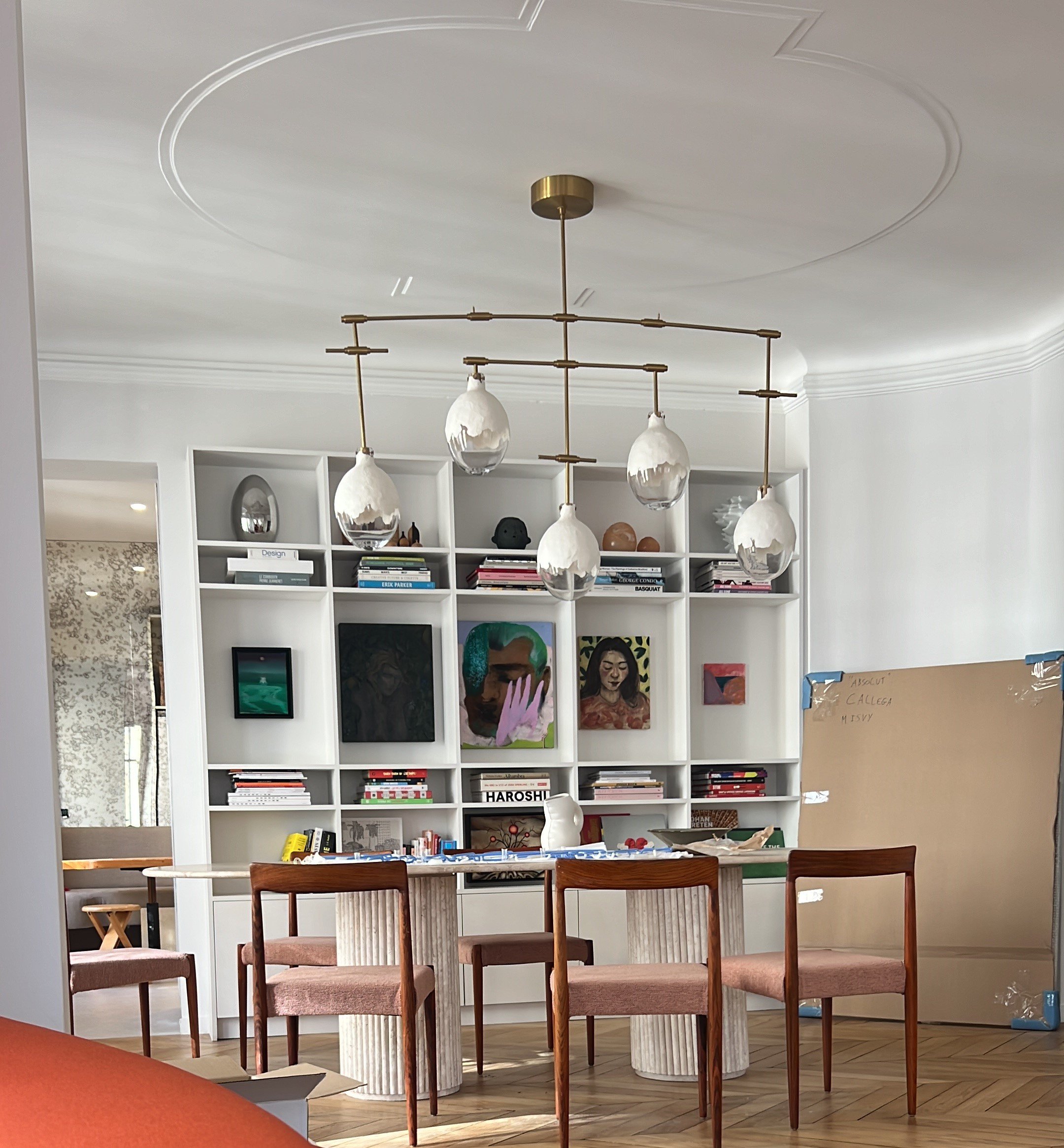
Raphaël's home
What are the three non-negotiable criteria before acquiring a piece?
First and foremost, the image has to resonate with me on a daily basis. I need to genuinely enjoy living with the work. Second, I need to have followed the artist for some time. I rarely buy immediately — observation is key. If I had bought everything I liked early on, I would be financially ruined today.
Beyond that, many elements matter: the medium, the size, whether the work is representative of the artist’s broader practice, the color palette, and pricing relative to the market.
One crucial but often overlooked factor is spatial harmony. I need to know exactly where the piece will live in my apartment and how it will interact with the other works and furniture.
How do you balance taste and investment?
Interestingly, every acquisition I made purely with an “investment mindset” failed to perform as an investment. The works that truly hold value are the ones bought with conviction, coherence, and personal attachment. Taste first, discipline second.
How do you determine the “right” time to sell a piece?
If I had to simplify it, I’d say the right time to sell is when everyone wants the work. That’s when demand is real, visible, and competitive.
If you miss that momentum, selling can become extremely difficult. You might have to wait years for interest to return — and sometimes it never fully does. Timing in art isn’t about predicting peaks perfectly, but about recognising collective desire when it’s happening.
That said, selling is never automatic for me. Emotional attachment plays a role, and many works I own were never acquired with resale in mind. When I do consider selling, it’s usually because the market conditions align clearly, not because I need liquidity.
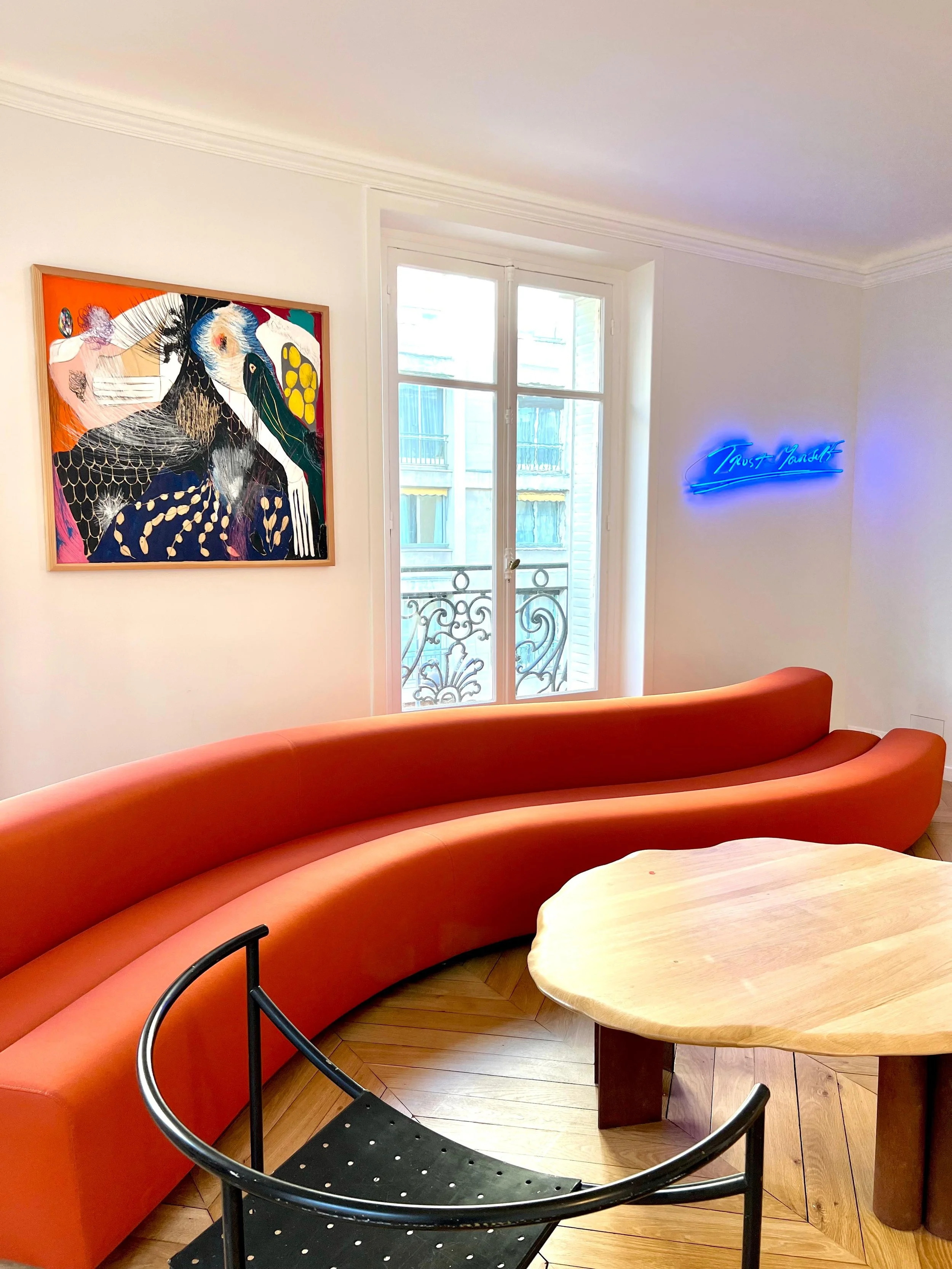
Raphaël's home including his Tracey Emin, Trust Yourself
What is your approach to negotiation?
Negotiation depends entirely on the level of demand. If a work is highly sought after, I don’t negotiate at all. Trying to push for a 10% discount can easily cost you the piece, and that’s rarely worth the risk.
In calmer situations, I do ask for adjustments — typically around 10%, or alternatives such as free shipping or framing. I always keep the conversation respectful and realistic.
In the end, maintaining good relationships matters more than winning a negotiation. Art is a long-term ecosystem, and reputation travels fast.
Tell me about your three favourite works in your collection.
1. George Condo — Work on paper
George Condo is the artist who truly pulled me into art collecting. His presence across culture is unmatched: museums, major galleries like Hauser & Wirth, collaborations with Kanye West, and constant visibility at top fairs. To me, he is the defining artist of our generation. Some people call it hype — I don’t care. I live with this work every day and it never loses impact.
On VIP day at Art Basel Miami, I ran straight to the Sprüth Magers booth. The work was in the backroom, available, titled Paris. That sealed it. I’ve owned it since 2022 and never considered selling, despite receiving strong offers well above my purchase price.
2. Tracey Emin — Trust Yourself (neon)
I’m deeply drawn to artists who master multiple mediums, and Tracey Emin embodies that perfectly. Neon, bronze, works on paper, canvas — everything feels emotionally precise. I acquired this neon on the secondary market directly from Xavier Hufkens.
The phrase resonates deeply with me. I read it almost every morning, especially in moments of doubt. It’s both intimate and powerful, which is exactly what I look for in art.
3. Robert Nava — Ghost
This was an early acquisition, well before the Pace signing and the subsequent hype. Initially, I wasn’t fully convinced by the technique or rawness of the style. Thanks to conversations with a few experienced collectors, I learned to understand and appreciate the visual language he was developing.
Over time, that language became increasingly significant, and owning an early work feels particularly meaningful today.
Sign up to keep up with upcoming blogs and news from the studio.