
The Role of Art Today with ANNA MCNAY
Anna McNay boasts a rich academic and creative background, having studied German and Linguistics at the University of Oxford—where she earned her MPhil and secured a Teaching Fellowship—alongside an Alexander von Humboldt Research Fellowship that took her to both Oxford and the Humboldt University in Berlin. Bringing that scholarly precision to the arts, she added an MA in Art History from Birkbeck, University of London, as well as an award-winning NCTJ production journalism qualification to her credentials. Since 2011, McNay has established herself as a prolific writer, editor, curator, and panelist, contributing to high-profile publications ranging from Elephant magazine and State media to Studio International, Art Quarterly, and The FLUX Review. In this exclusive interview, she shares her expert perspective and insider insight on the current state and evolving dynamics of the London art world.
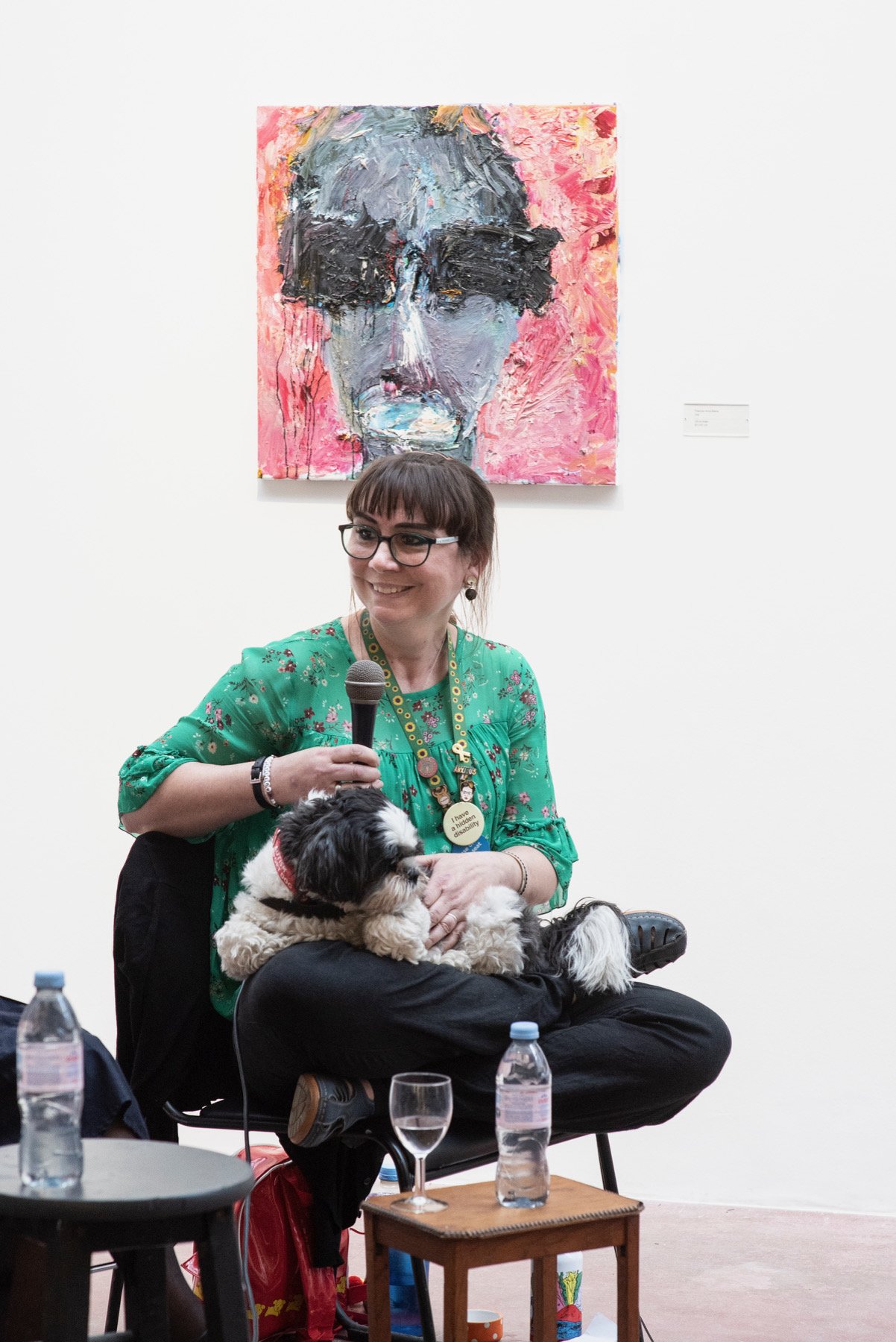
Anna speaking on a panel, Greatorex Gallery, June 2026
You’ve spoken before about the value of aesthetics versus conceptual meaning in art. What do you feel gets lost when an artwork leans entirely into the conceptual realm over the visceral or aesthetic? Is there a balance to strike?
I definitely think there is a balance to strike (although, if it were entirely up to me, I’d probably abolish the conceptual completely!). For me, it is integral to art that it speaks to someone on an emotional level; it is (or should be) something raw and pre-linguistic. We have words for when we want to go on a jaunt into the conceptual, but then it’s no longer art – or perhaps I should say Art with a capital A, since literature is an art in its own right. But I work in the world of the visual arts/Art. A good contemporary example of an artist whose work I feel hits me in the stomach is Frances Aviva Blane. An example of recent works I struggled with were the installation, film and performance pieces by Freestylers in the otherwise excellent Flare-Up! exhibition at Goldsmiths CCA.
How do you feel about the pressure of the commercial gallery world impacting an artist's ability to take risks or explore deeply personal themes? How important do you feel it is that today's artists maintain a strong sense of integrity in their practice?
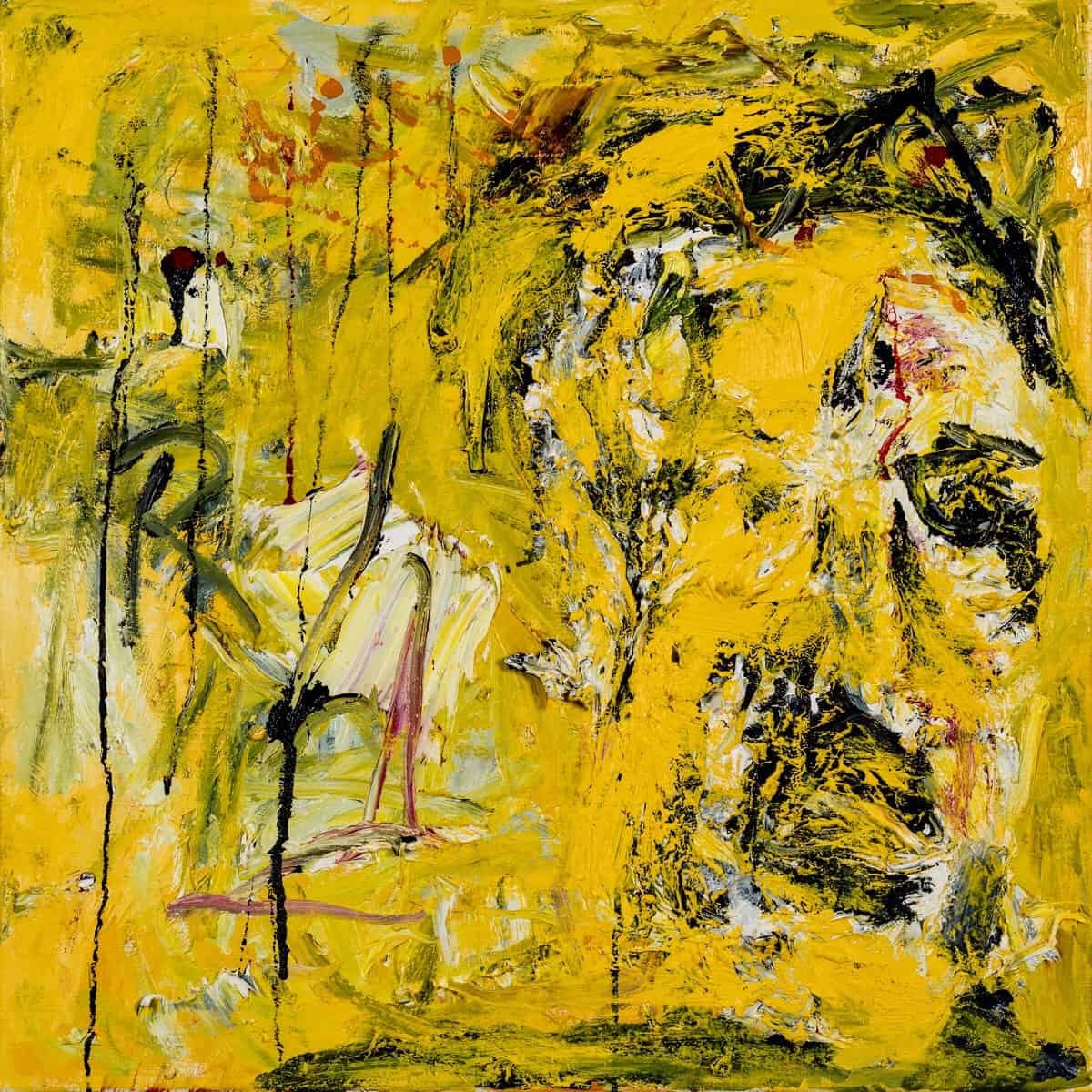
Frances Aviva Blane, Yellow Head. 90 x 90cm
I think one of the greatest tragedies in art is when a promising artist gets picked up by a gallery too soon and then ends up having to churn out more and more and more of the format that the gallery can sell, which, after some time, is no longer what the artist authentically wants to be making. It is vital that an artist maintains a strong sense of integrity. A good example of an artist with integrity is Judith Burrows. She is a professional photographer, who, at a later stage in her career turned to making paintings and prints, and then went as a mature student to the RCA and began making the most beautiful sculptures in tandem with nature. She has a distinctive style throughout, but is not prepared to stay stuck with one medium. I feel like Howard Hodgkin, an artist whose work I mostly love, had less integrity in his final years when he turned to churning out large canvases covered in dots.
Is the contemporary art world genuinely becoming more democratic, or is "accessibility" mostly an industry buzzword?
Sadly, I think it’s largely a buzzword. There are so many really simple things that could be done to render exhibitions more accessible to a huge range of people, but, for the main part, they’re not being done. For example, audio descriptions of each work; tactile carpet; allowing touch. I curated an exhibition last May with the blind artist David Johnson and his fabricator (and artist in her own right) Emma Dickson. I learned so much from them both about this. Plus, I obviously am immensely grateful to all the museums and galleries (so far all except for the National Museum Cardiff) who permit me to take my support dog, Parsley, in with me. I am autistic, and his presence helps me indescribably with my social anxiety, and he enables me to do my job as an art critic (#TheCriticWithTheDog).
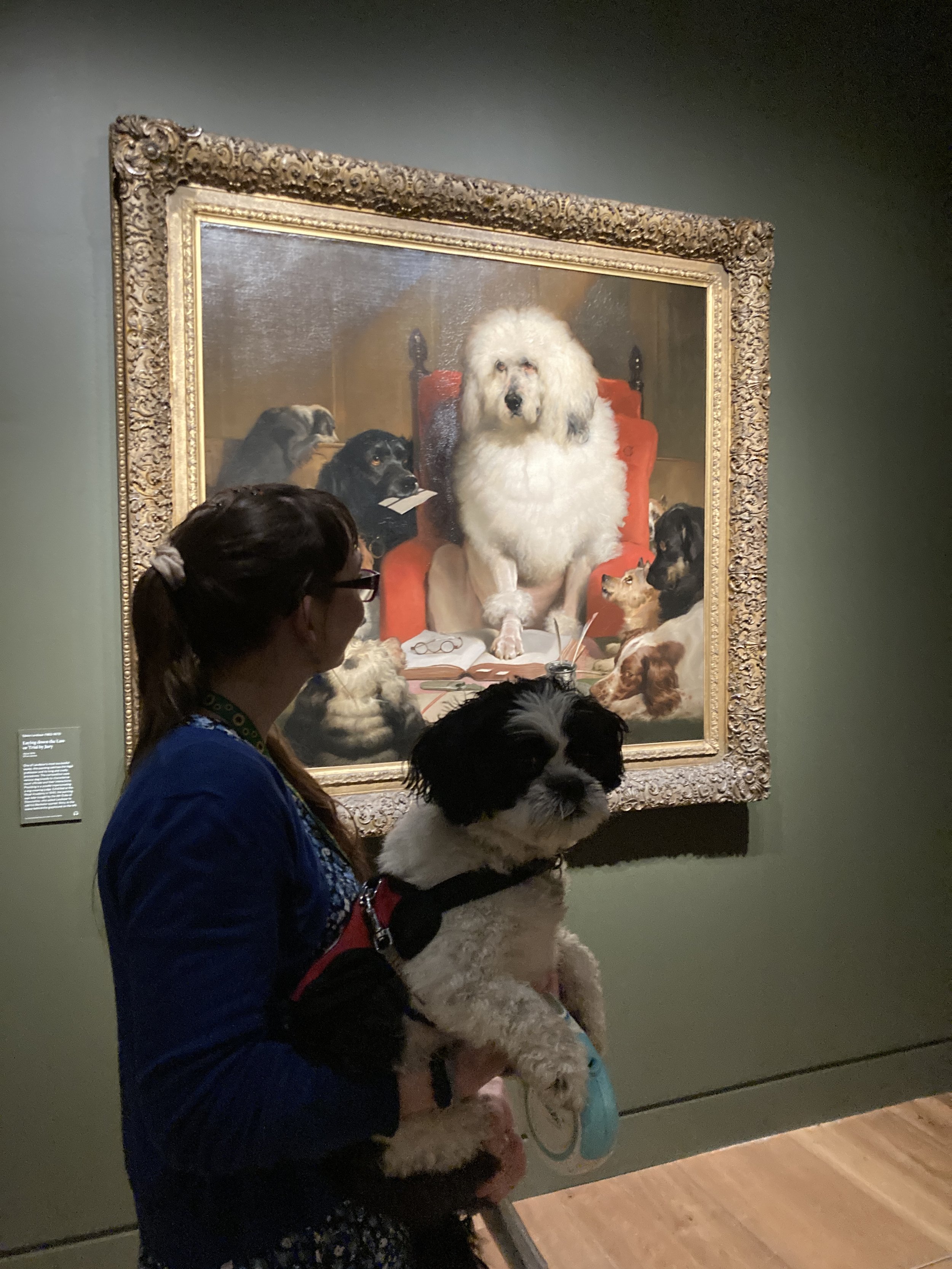
The Wallace Collection, March 2023
Tell me a little more about your focus on highlighting LGBTQ+ art, gender, and body representation. How do you feel curators, critics, and even artists themselves can ensure underrepresented voices are meaningfully included?
When I was starting out writing about art, people kept telling me I needed a USP, and it organically developed with that being a special interest in LGBTQ+ work. One of the kickstarts to my career was being arts editor on DIVA magazine and getting to feature a female-identifying LGBTQ+ artist each month in print.
Now, I have a lecture series on Women Artists Through Their Words, where I deep-dive into an artist and share material from their letters, journals, memoirs, interviews, short stories, poetry, or whatever. I’ve got about 40 lectures prepared now and have a list of about 30 more artists, which is always growing!
As for how to ensure underrepresented voices are meaningfully included – I guess it’s largely about being aware of unconscious bias and, maybe in the first instance, positively discriminating. Although I’m not a fan of that, and long for a day when artists will be included in things solely on the value of their work, not because they tick whatever boxes.
How have representations of the human body, sexuality, and gender evolved in contemporary art compared to historical periods?
That’s actually the topic of another of my lectures! Broad brush, things have obviously changed a lot since when women were presented as objects on a plate to a male audience. Since then, we have had the female gaze, the queer gaze, the crip gaze… We now recognise that bodies aren’t all one size, shape or colour, they can be male, female or anything in between, there are many different (dis)abilities… All these concepts, theories and actualities feed into contemporary art. There are so many different layers to it. A great example of a contemporary female artist portraying the female body is Eileen Cooper.
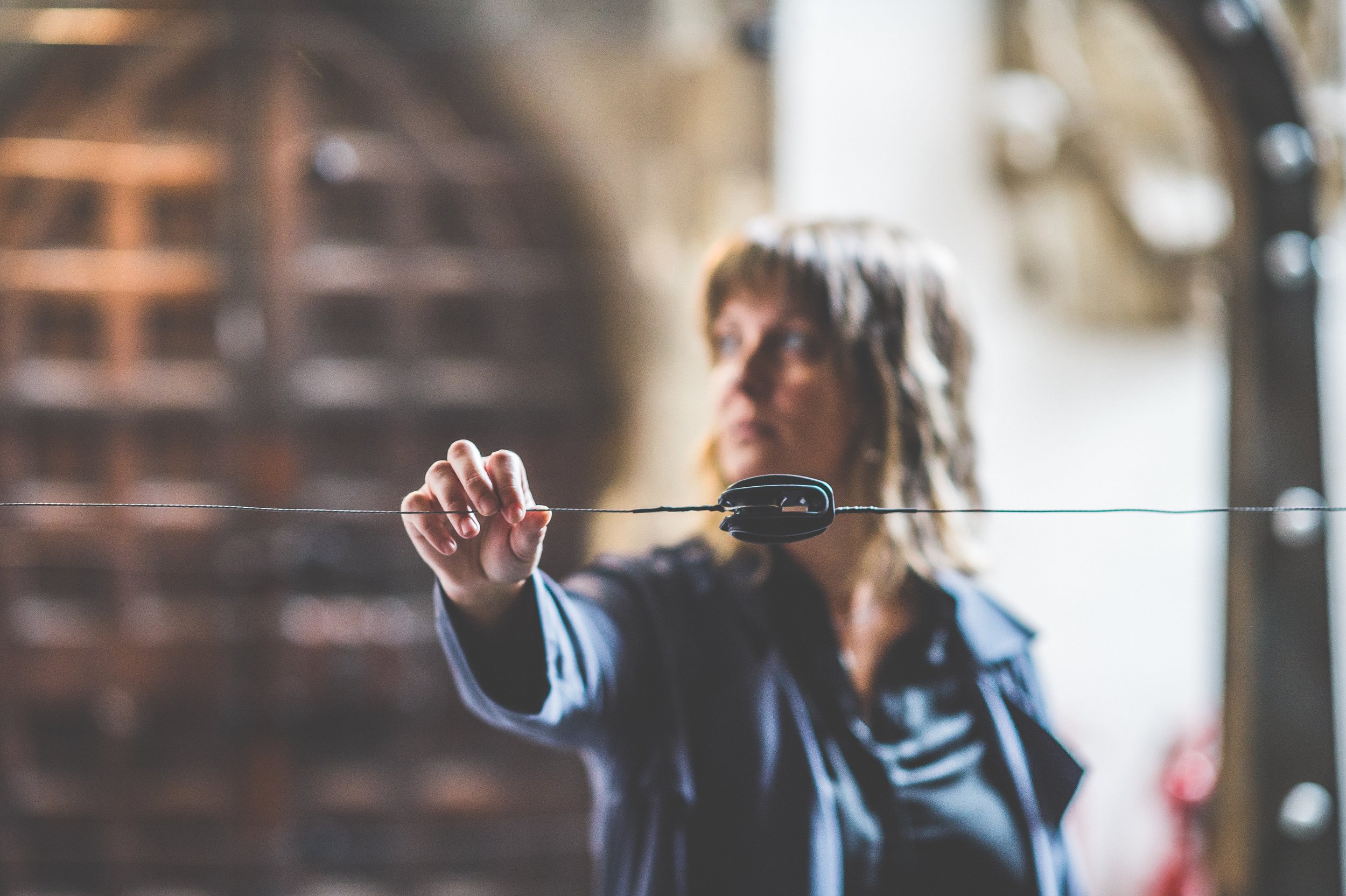
Annabel McCourt, Electric Fence, 2017
How do you feel about the impact today's contemporary art has on socio-political issues? Has it become more engaged in impacting these sorts of issues?
Art has been political for as long as it has existed. Any body in any space is political. Think of Hogarth; think of cave paintings! I have just interviewed an amazing artist, Annabel McCourt, however, whose work truly epitomises ‘socio-political’. Look her up! She had to have two security personnel outside her latest exhibition because of far-right protests.
You've talked about coming to art after an extended period of illness as a way to return to yourself. Has art acted as a space for healing or processing mental health in your own life? Tell me more about your views on mental health within the context of art in general.
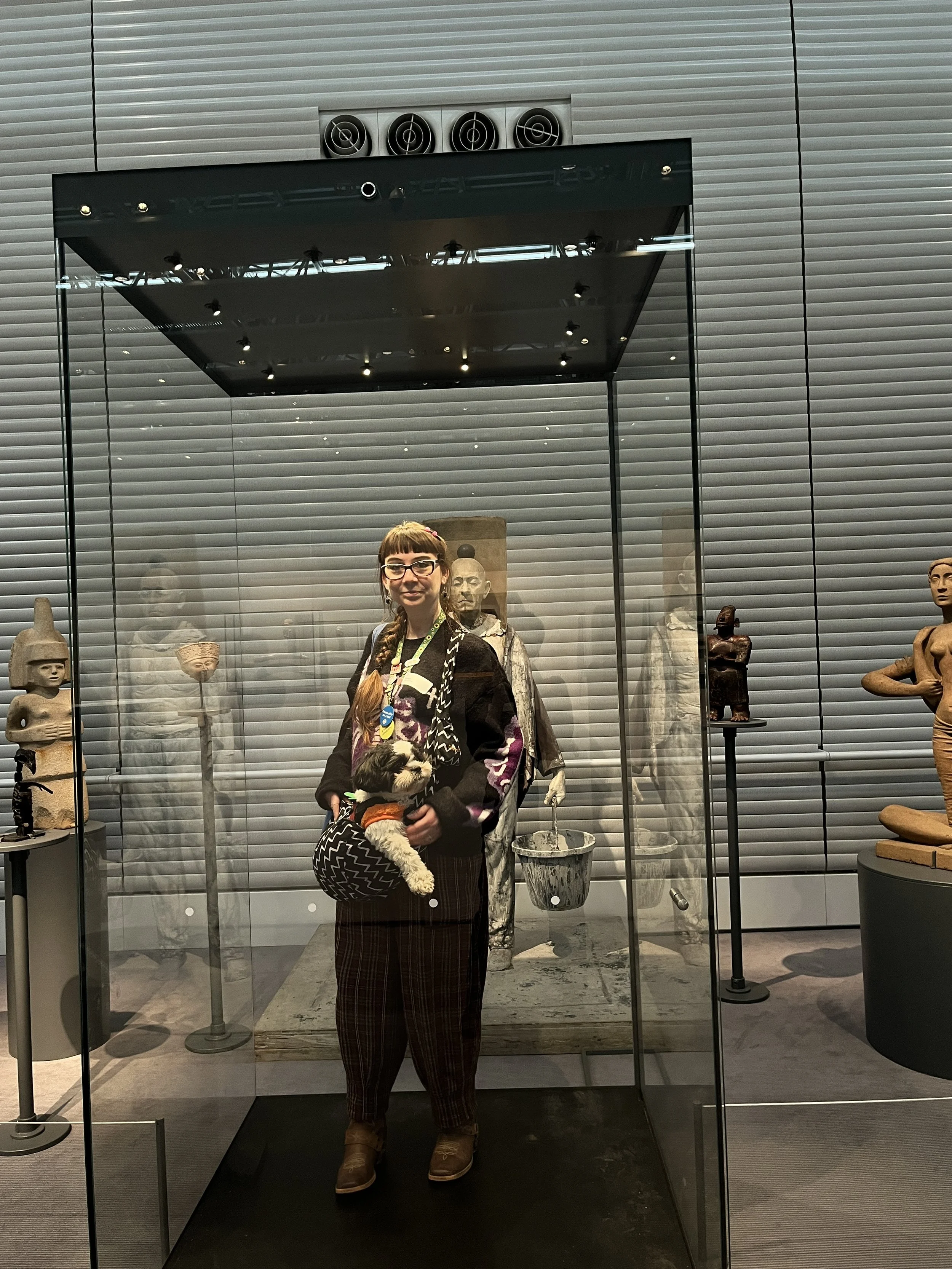
Sainsbury Centre for Visual Art, March 2025
Art has been my saviour on so many levels. In my previous life, I was an academic linguist working on very theoretical stuff – my colleague once derisively called it ‘brain games’. Anyhow, I got to the point where I literally couldn’t hear the content of what was being said to me because I’d be crunching the grammatical structure and siphoning off examples to support various theories. I had a spectacular breakdown and a protracted battle with anorexia, and I really needed to get out of my head. It was on stumbling upon an exhibition of Tracey Emin’s work at White Cube Mason’s Yard that I had an epiphany. Her words (in her monoprints) spoke to me so clearly, and I suddenly realised I wasn’t alone in my extreme feelings. (And, to go back to the first question, this is what I mean about art affecting us viscerally!) Although my way in was through words, I’ve since found healing in non-verbal imagery as well. Looking at – and making – art can be so game-changing with mental health. I’ve been able to access feelings I cannot name and things that go deeper than words. Life drawing really helped me with body image in recovery, and phototherapy (with Rosy Martin – look her up too!), where I smashed my scales, helped me move on in a way that I never thought possible.
I think it'd be amiss to not ask your thoughts on social media and its impact on our art world today. As unsexy a question as it is, tell me your opinion on social media.
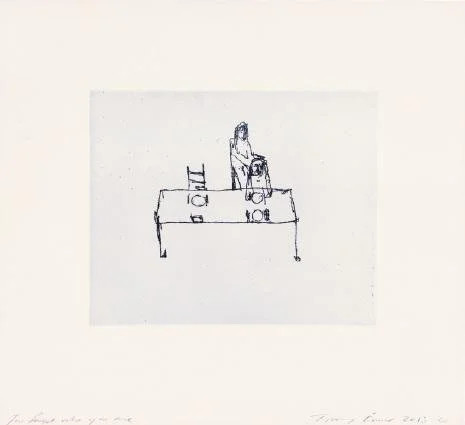
Tracey Emin, You Forgot Who You Are, 2013
It’s both a godsend and a devilsend (if I can take the liberty of creating that word!). It enables artists to share their work with people all around the globe in a matter of seconds, and, as we saw during Covid, movements such as the #ArtistSupportPledge can be lifesaving. Nevertheless, what we see on social media isn’t real, and I don’t just mean the people! The art doesn’t look much like it does in reality, at full size, with all its glorious texture and nuance. Even with photographs, you lose something about scale and surface. I think social media is great to use to spot something or someone new, but then it is necessary to delve into the real world to experience the art as art (or, again, maybe Art?).
Give me some examples of work you've found very moving over the years. Anything you just keep coming back to? Why?
Tracey Emin. Full stop. Pretty much anything and everything she has made. But, if pushed to pick just one, You Forgot Who You Are (2013) has special resonance. I imagine it as me and my mum at the dining table during the depths of my eating disorder.
Egon Schiele’s Crouching Nude Girl with Lowered Head (1918) is another absolute all-time favourite. I just think it’s so exquisitely beautiful.
Bill Viola’s The Passions (2003) is one that gets me viscerally every time. Howard Hodgkin, Albert Irvin, some pieces of Gillian Ayres and Barbara Rae. The colours and movement are so vital. And Frida Kahlo’s The Broken Column (1944), which just speaks so clearly for anyone with chronic illness.